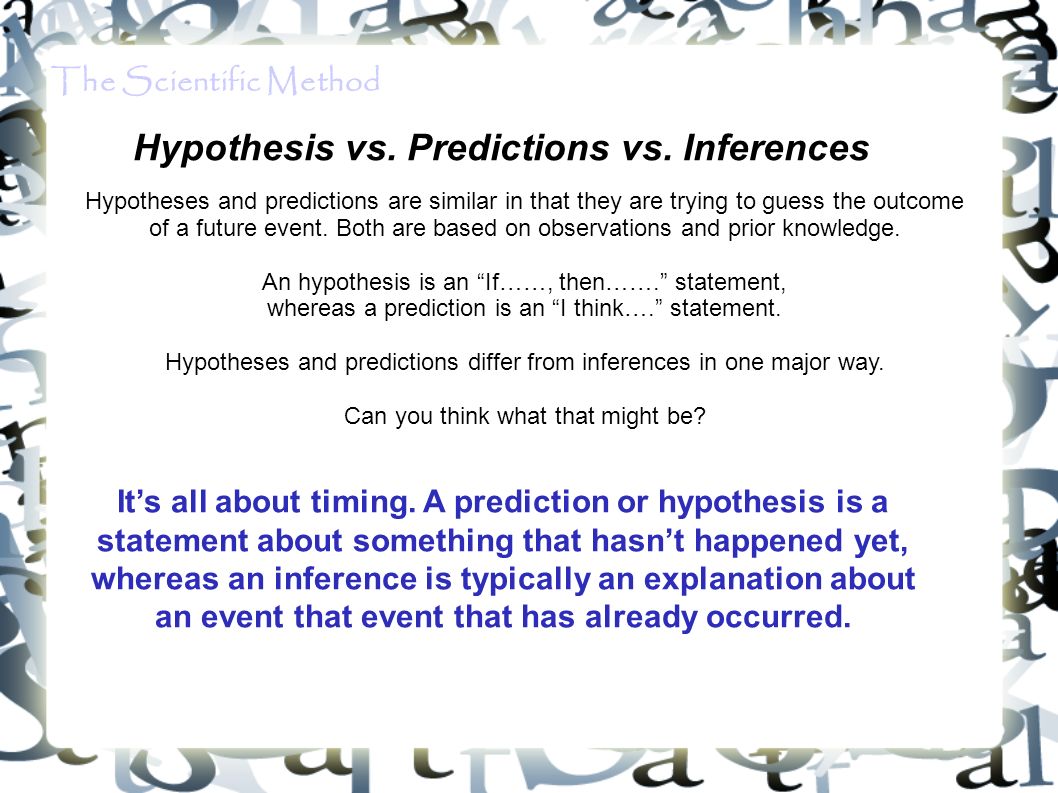
Think of a hypothesis as your best guess at the start of a party. It’s the idea you walk through the door with: “I bet this party will be boring because no one is dancing yet.” An inference is the conclusion you draw halfway through, after you’ve seen people spill drinks and play air guitar.
A hypothesis is about prediction—it’s a “maybe” that points forward. An inference is about explanation—it’s a “because” that looks backward at evidence you already have. (And yes, they often hold hands like awkward dance partners.)
Hypothesis: The “What If?” Machine
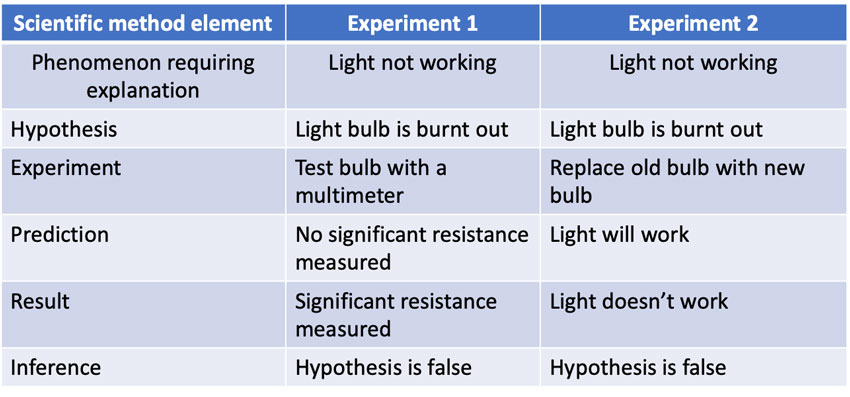
When you form a hypothesis, you are basically asking a question in a suit and tie. It sounds official: “If I water my cactus three times a day, then it will grow faster.” But under that suit, it’s just a curious guess. A hypothesis is testable and falsifiable—meaning you can prove it wrong.
That’s its superpower. You don’t have to be right; you just have to be willing to test it. For example, my fridge hypothesis was that the pizza was stolen. That was testable—I just needed to check the trash can. (Spoiler alert: There was no pizza box. Only shame.)
 Hypothesis Examples Science
Inference: The “So, That’s Why” Detective
Inferences happen after the evidence shows up. They are the stories your brain weaves from facts. You see wet grass and wet shoes? You infer it rained. You see a friend crying over a keyboard? You infer their boss sent a “very important” email at 10 PM.
The sneaky thing about inferences is that they feel like truth. But they’re not—at least, not always. My inference that my roommate was a pizza thief was strong in my head, but it was dead wrong. Inferences are just the best explanation you can build with the clues you have.

