
While the feds are doing the slow-motion shuffle, states and cities are zooming ahead. Places like California, New York, and Washington have already set their sights on $15, $16, or even $18 an hour. They don’t wait for Uncle Sam. They just do it.
These increases usually happen on January 1st or July 1st. Why? Because it’s tidy. It’s like the universe’s way of saying, “New year, new you… and new cash.” Some states also adjust their minimum wage based on inflation, which means it can creep up every year without anyone having to argue about it.
You can look up your own state’s schedule online. Just type in “your state minimum wage 2026” and boom—a calendar of pay raises appears. It’s like magic, but with less smoke and more paperwork.
The “Tipped Wage” Twist
Here’s where it gets extra tricky. If you’re a waiter, a bartender, or a hairstylist, you probably get a tipped minimum wage. That’s a lower base rate—like $2.13 an hour federally—but you’re supposed to make it up with tips. Emphasis on “supposed to.”
Some states have banned this practice entirely. Illinois, for example, is slowly phasing out the subminimum wage. Other states? They’re still living in the past. So, if you’re a server, check your state’s laws. You might get a raise sooner than you think.
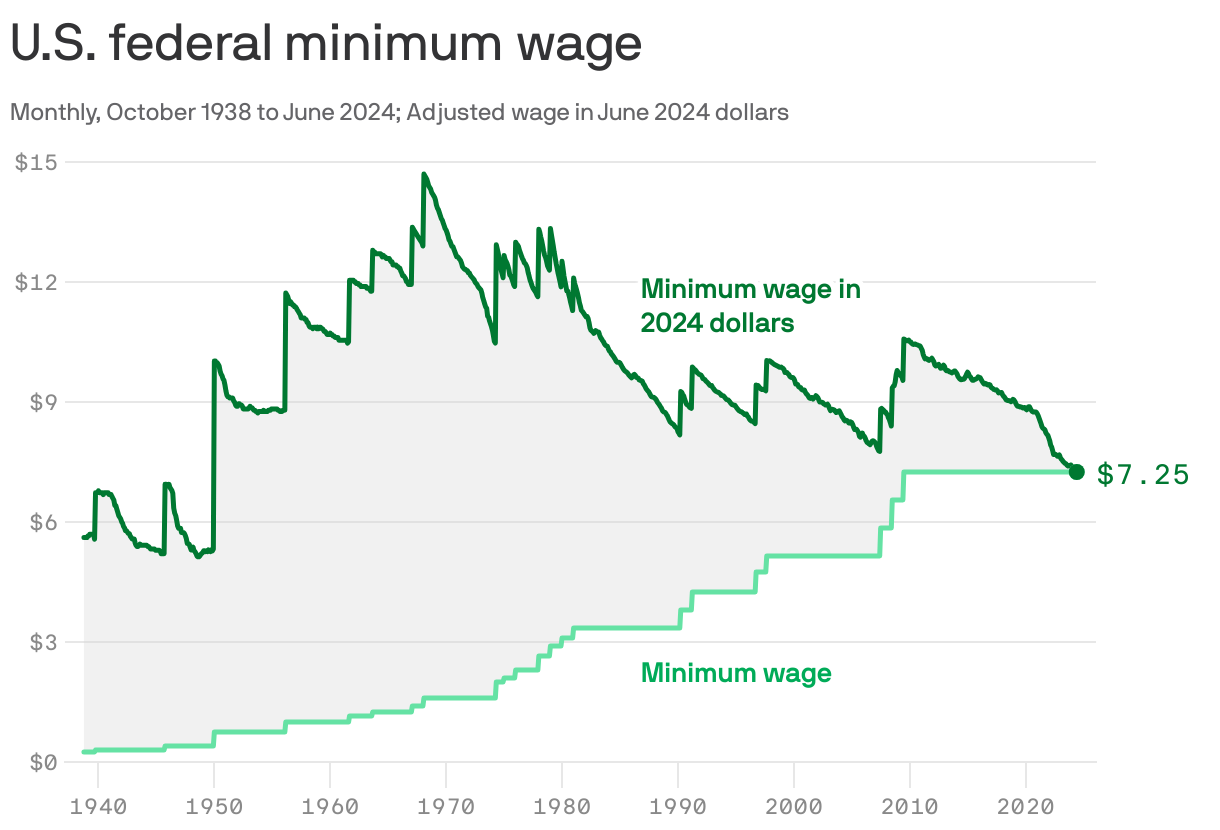 The last federal minimum wage increase was 15 years ago
And don’t forget about cities! Seattle, San Francisco, and Denver have their own minimum wages that are higher than their states. If you work in one of those cities, congrats—you’re probably already cashing bigger checks.

