First, the good news: the Federal Aviation Administration (FAA) approves CPAP machines for use on flights as medical devices. They’re in the same category as oxygen concentrators, which means you’re not going to get kicked off for breathing easier. The catch? You need a note from your doctor—like, a formal letter confirming you have sleep apnea and that the CPAP is medically necessary. (Don’t even think about printing a fake one from WebMD.)
Also, your machine must be FAA-approved. Most modern CPAPs, like the ResMed AirMini or the Philips DreamStation Go, are classified as “lithium battery-powered” and meet the standards. Check the label on the bottom of your machine—it should say “FAA compliant” or something similar. If it doesn’t, you might need to call the airline’s medical desk and grovel.
Battery power is your secret weapon
Here’s the thing: most airplanes don’t have outlets at every seat, and even if they do, the power supply can be wonky. (Ever tried charging a laptop at 35,000 feet? You get a flicker, then nothing.) So you absolutely need a portable battery pack designed for your CPAP. These things are pricey—like $200–$400—but they’re worth every penny to avoid being that person who plugs into the seat’s USB port and causes a blackout.
I use a PowerPack 24V from a company called “Freedom” (ironic name, right?). It lasts about eight hours, which is perfect for a red-eye. Just make sure you charge it before you board, and pack it in your carry-on. Never check your CPAP or battery—imagine your luggage going to Tokyo while you land in New York. No thanks.
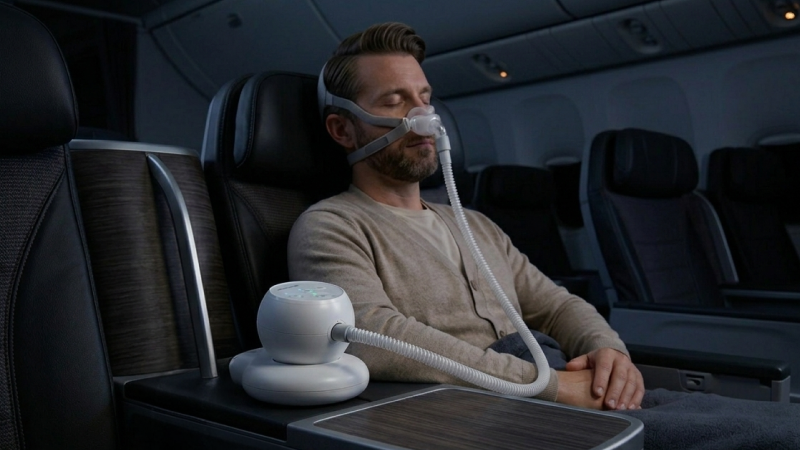 A Complete Guide to Flying with a CPAP Machine | Transcend