
The USDA, bless them, says chicken should hit an internal temperature of 165°F (74°C). That’s the safe zone where salmonella and its nasty friends get nuked into oblivion. It’s a rule you can trust, like “don’t text your ex at 2 AM.” But here’s the irony: cooking to 165°F can turn your chicken into a dry, sad rubber band. That’s because temperature doesn’t just kill bacteria; it also kills moisture. And nobody wants a chicken breast that tastes like a math test.
But wait—before you scream “I’m never eating chicken again,” relax. There’s a trick. Time plus temperature is the real equation. Chicken can be safe at lower temps if it stays at that temp long enough. For example, cooking a breast to 150°F and holding it there for three minutes does the same bacterial damage as hitting 165°F instantly. It’s science, not sorcery. (And yes, your thermometer needs to be accurate—so invest in a good one, you cheapskate.)
The Prime Cut Problem: Not All Chicken Is Created Equal
Let’s get real about cuts. A chicken breast and a chicken thigh are not the same animal. Breasts are lean, so they dry out fast. Thighs? They’re fatty and forgiving. For breasts, aim for 155°F to 160°F, then let them rest. Carryover cooking will bump it up to 165°F without turning your dinner into chalk. (Yes, carryover is a real thing—the chicken keeps cooking even after you pull it off the heat. Thank me later.)
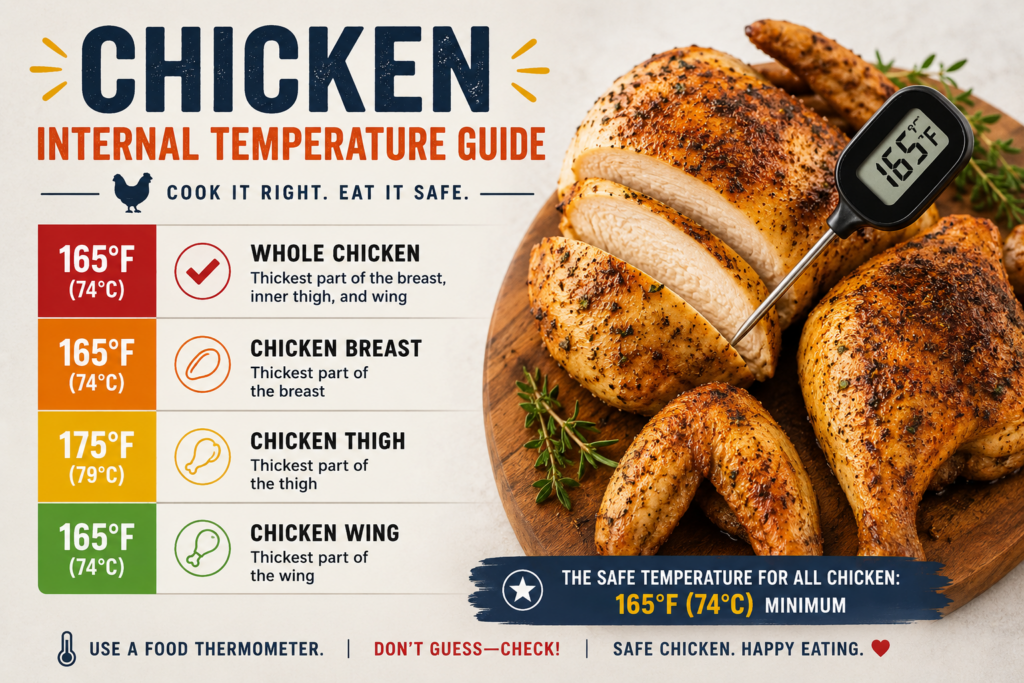 Chicken Internal Temperature Guide for Smoking (Safe Temps + Best
Now, thighs, drumsticks, and wings? Those bad boys can handle 175°F to 185°F without turning into jerky. The extra heat breaks down collagen, making the meat tender and juicy. So please, for the love of crispy skin, don’t yank a thigh at 165°F. It’ll taste like a gummy bear’s nightmare. (I say this from experience. The bear didn’t look happy.)

