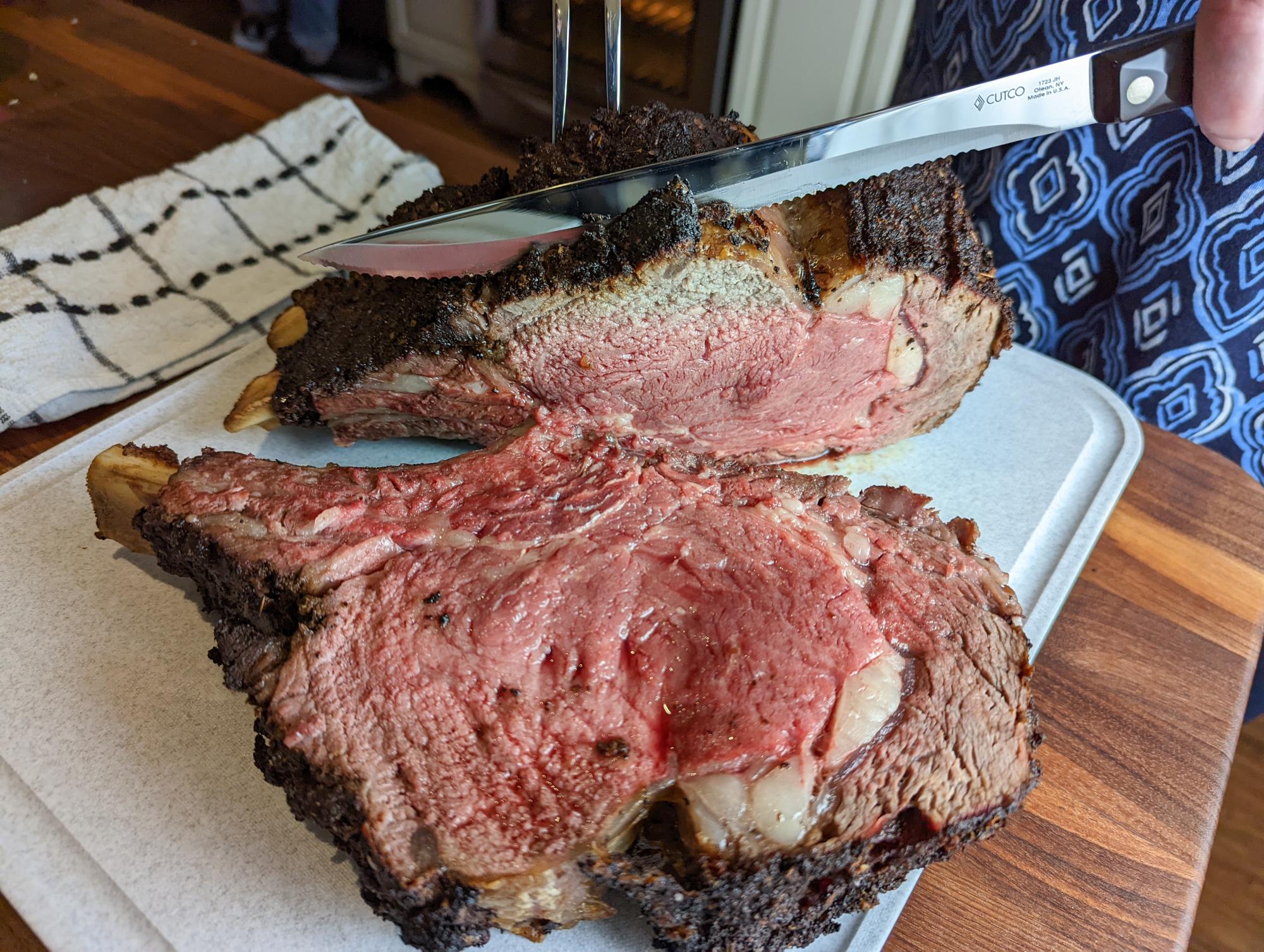
Now, look at your roast. You want to cut against the grain. The “grain” is the long lines of muscle fiber running along the meat. If you cut with the grain, you get chewy, stringy strips. If you cut against it, you get tender, bite-sized pieces that practically melt.
How do you find the grain? Look at the surface of the roast. See those little parallel lines? That’s the grain. Your knife should cut across those lines. Make each slice about ½ to ¾ inch thick. Too thin, and they cool off fast. Too thick, and you’re eating a steak with a fork.
Use a gentle, sawing motion. Don’t smash down with force—let the knife do the work. If you hear a squishing sound, you’re doing it right. If you hear a scream, you might have hit your thumb. Please don’t do that.
The Golden Ribbons (And What to Do with Them)
As you slice, you’ll see the perfect pink center fading to a darker edge. That’s the maillard reaction showing off. It’s the crusty, caramelized outside that tastes like pure beef candy. Don’t waste a single piece of it.
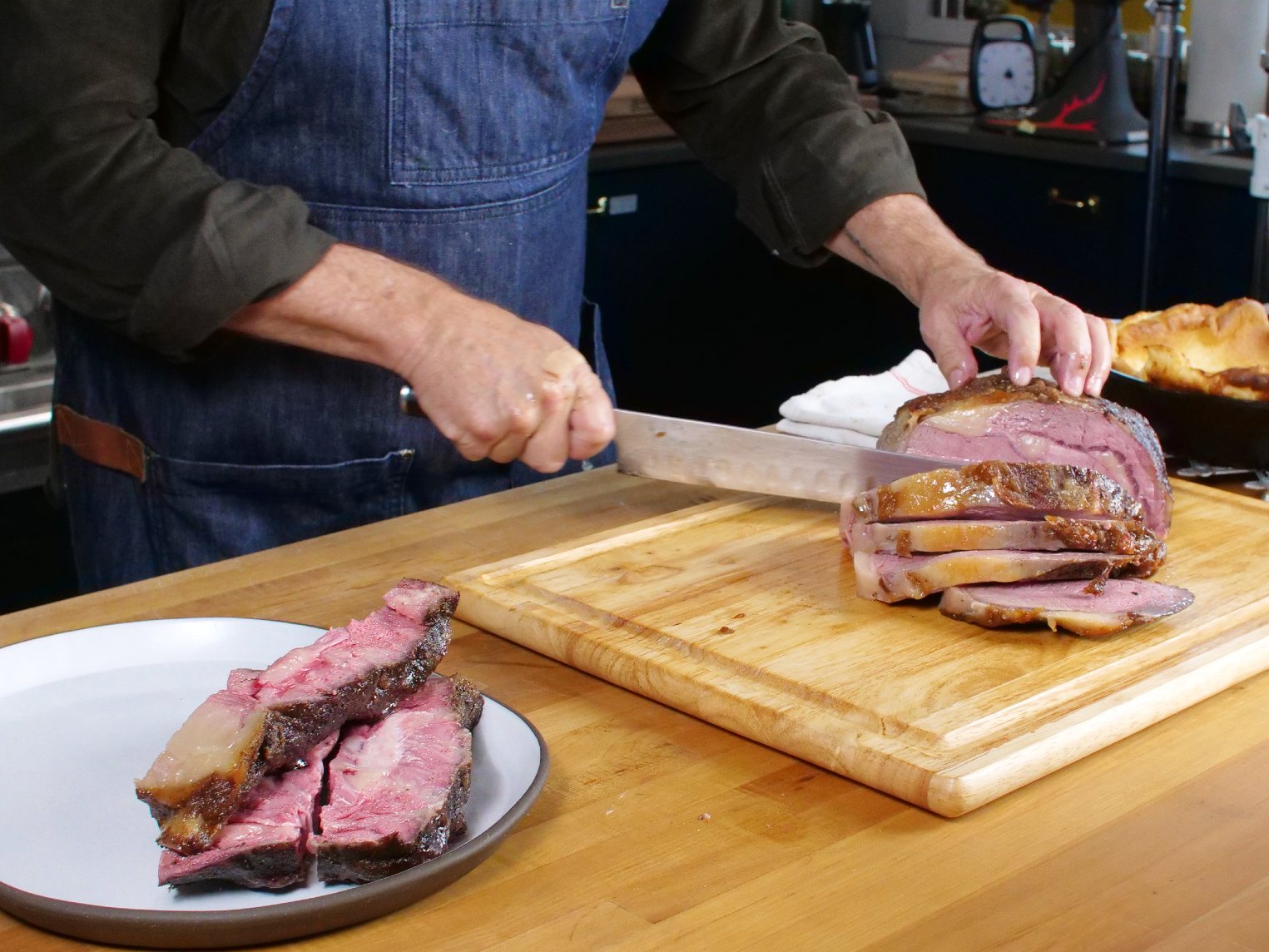 Holiday Standing Rib Roast | Recipe Cart | Recipe Cart
Arrange the slices on a warm platter. Overlap them a little, like a delicious, meaty shingle roof. Pour any juices from the cutting board over the top. That’s pure flavor gold.
And for the love of all that is holy, do not serve the ends to your mother-in-law. Save those crispy, crusty edge pieces for yourself. You earned them. You waited 30 minutes and didn’t pick at the meat. That’s discipline.

