
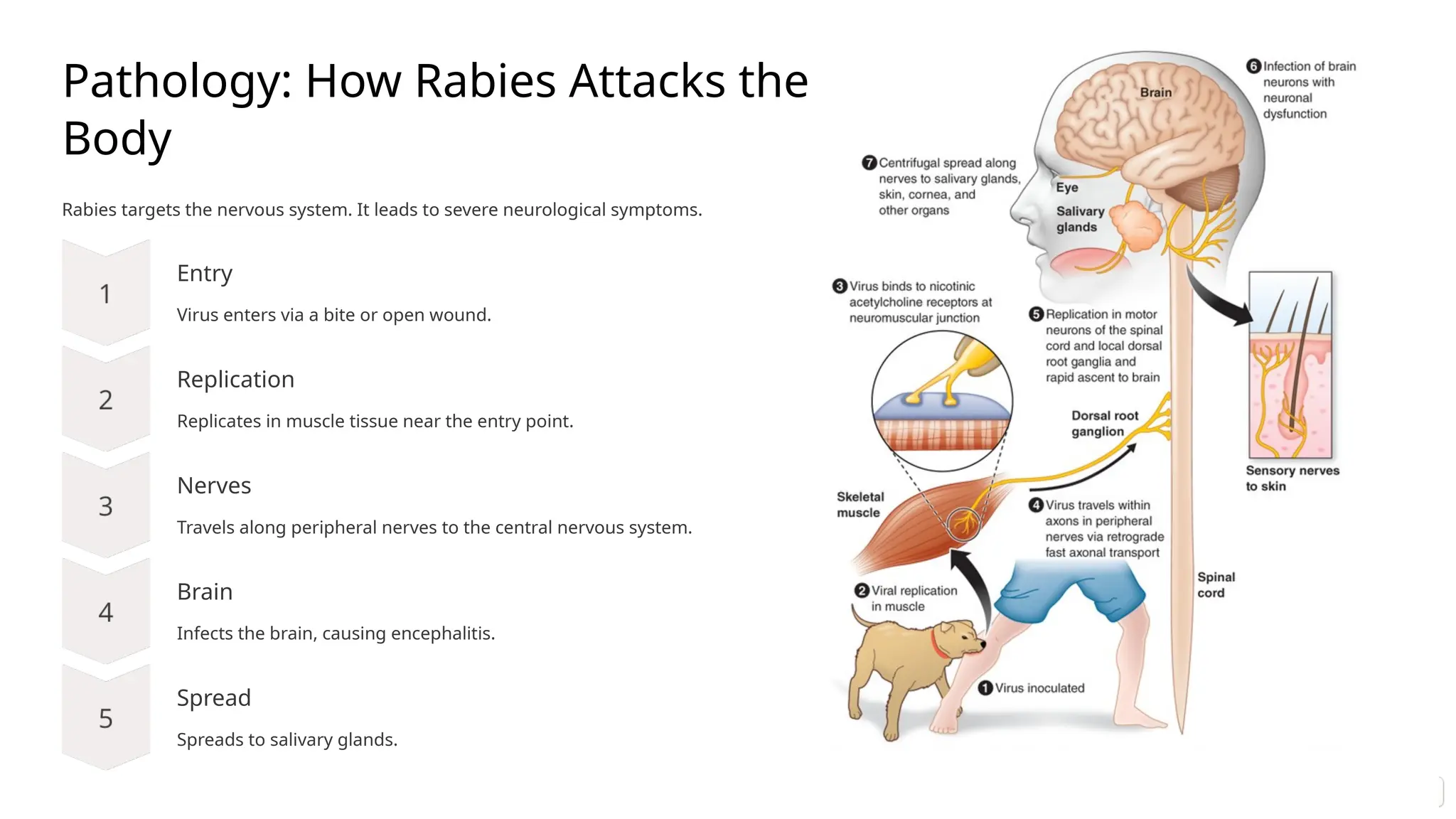
After the virus gets in, it doesn’t punch your immune system right away—it’s sneaky. It creeps along your nerves at about the speed of a lazy Sunday stroll, heading straight for your spinal cord and brain.
Once it reaches your brain, the real trouble starts. Your body might feel like it’s got the worst flu ever, with a fever, headache, and a general sense of “something is very wrong.” Then comes the classic symptom: foaming at the mouth, because rabies messes up your ability to swallow, so saliva builds up.
But here’s the kicker: the virus also makes you terrified of water—that’s why it’s called “hydrophobia.” Imagine being parched on a hot day, but the sight of a cold glass of lemonade makes you panic and choke.
A Tale from the Real World
A friend of mine once found a bat in her attic. She shooed it out, but the next morning, she noticed a tiny scratch on her arm—so small she’d forgotten about it. She went to the doctor, got the rabies vaccine (a series of shots in the arm, not the stomach anymore), and was fine.
If she hadn’t gone? That bat can be a carrier, and a single scratch from a bat can transmit the virus. Bats are the sneaky ninjas of rabies—they rarely foam at the mouth, and their bites can be invisible, like a mosquito bite.
Another example: raccoons and skunks in your backyard. They look cute when they’re rummaging through trash, but if one is acting too friendly or wobbling during the day, that’s a red flag. Daytime activity in a nocturnal animal is often a sign of rabies.
 Rabies from definition to treatment all information | PPTX

