
First, let’s get one thing straight: the flu fever isn’t a permanent houseguest, but it’s not a quick drive-by either. For most healthy adults, that flu fever hangs around for three to four days—sometimes five if it’s feeling particularly dramatic. Think of it as a bad breakup: intense, exhausting, but mercifully finite.
Here’s the surprising part: your body is literally trying to cook the virus alive. That 101°F to 103°F reading? That’s your immune system turning your body into a tiny, sweaty oven. The virus hates heat, so your brain cranks up the temperature like a weird, biological revenge plot.
Act One: The Sudden Inferno (Days 1-2)
You wake up feeling fine, then BAM—your back aches, your teeth chatter, and you’re shivering like a chihuahua in a snowstorm. This is the fever’s grand entrance. It usually peaks within 24 hours, hitting that spectacular high that makes you wonder if you’ve spontaneously combusted. Spoiler: you haven’t, but your sheets will be soaked.
Don’t bother checking your calendar; time has officially stopped. This is where you cancel all plans, notify your boss you’ve “caught a mild case of dying,” and apologize to your couch for never appreciating it properly. Interesting fact: your metabolic rate increases by about 7% for every degree of fever. That’s why you feel like you ran a marathon while lying perfectly still.
Act Two: The Plateau of Suffering (Days 3-4)
By day three, the fever usually stops climbing and just… sits there. It’s like a stubborn toddler who refuses to leave the playground. Your temperature might bounce between 100°F and 102°F, teasing you with moments of “is it over?” only to roar back after a restless nap. This is the most common time frame for an uncomplicated flu fever to break.
This is also when you start hallucinating that your cat is judging you. (Spoiler: they always are, but the fever makes it more intense.) You’ll also discover that 3 AM is an excellent time to brood about that embarrassing thing you said in 2007. Fun fact: a fever can actually boost your immune response by helping white blood cells move faster. So your body is literally speeding up its defenses while you wallow.
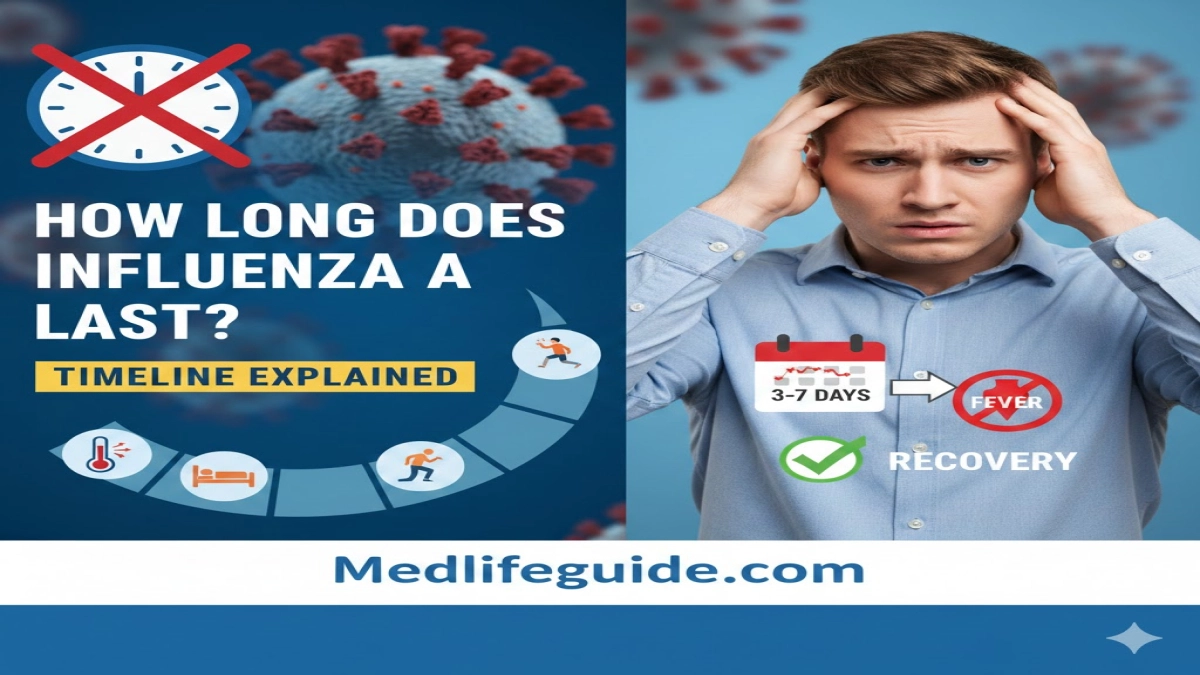 How Long Does Influenza A Last? Timeline Explained
Act Three: The Sweaty Victory (Day 4-5)
Then, like a miracle, it happens. You wake up drenched in what feels like a gallon of sweat, but you’re shivering less. The fever has broken. Your body has won the fight, and it’s celebrating by resetting your thermostat to normal. You might still feel like a damp, wrung-out sponge, but the fire is out. Most people see their temperature drop back to normal by day five, though fatigue can linger like an annoying party guest.
But wait—here’s the kicker: a fever that lasts longer than five days or spikes above 104°F is your sign to call a doctor. Don’t be a hero. The flu can sometimes invite bacterial infections to the party, like pneumonia or sinusitis. Also, children’s fevers can be trickier, so keep an eye on the little ankle-biters.

