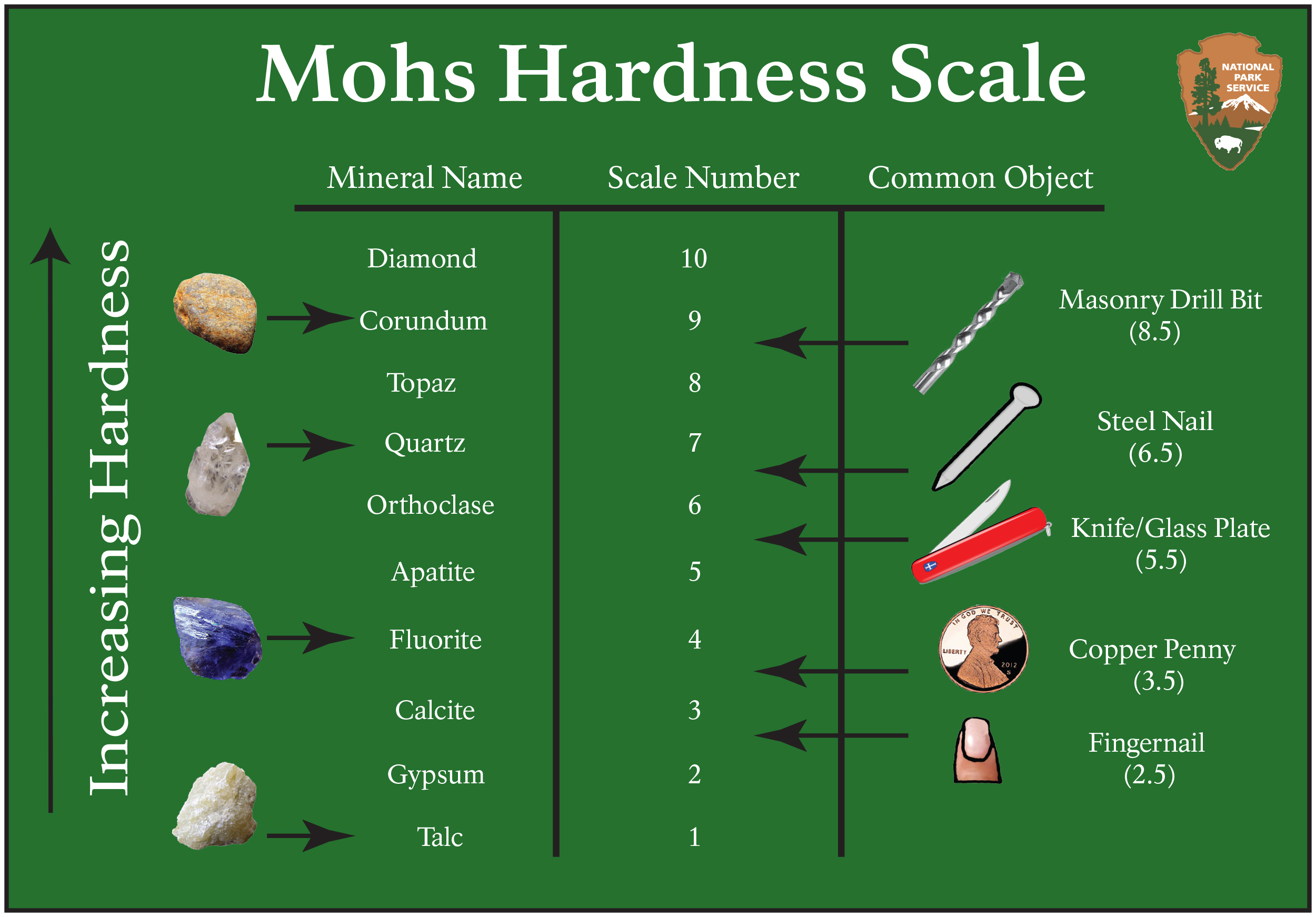
1. Build your own test kit. Wallet items are perfect: a copper penny, a steel nail (from a hardware store), a piece of glass from a jar, and a ceramic tile. Store them in a small pouch with your mineral collection.
2. Use the “Mohs-App” method. There are free apps that compare mineral photos and properties, but they can’t beat a real scratch test. Trust your hands first, your phone second.
3. Beware of fake “hard” stones. If a vendor insists their amethyst is an 8 (it’s actually quartz, a 7), test it with a steel blade. Real quartz will not scratch steel; topaz will. Trust but verify.
4. Protect your eyes and fingers. Small shards fly off when testing. Safety glasses are a good idea, especially when scratching glass. And never test a mineral you value highly with a tool that could damage it.
Quick quiz: You find a shiny gray rock. Your nail won’t scratch it, a penny barely marks it, but a steel knife leaves a visible line. What’s its hardness? If you said between 5 and 5.5, go grab a geologist badge. You’re basically a field expert now.
The Daily Reflection: Softness is a Superpower
In a world obsessed with being hard—tough deadlines, strong opinions, unbreakable plans—minerals teach us a quiet lesson. A diamond is forever, but it’s also brittle. Talc is a 1, yet we use it in baby powder, cosmetics, and even dinner plates (yes, talc is in ceramics). Softness, it turns out, has its own utility and grace.
So the next time you hold a stone, ask it: How hard are you? But also ask yourself: When do I need to be diamond-tough, and when can I be talc-soft? Because resilience isn’t always about resistance. Sometimes, it’s about knowing exactly what you’re made of—and letting the world scratch the surface just a little.
Now go find a rock. Scratch it wisely. Live flexibly.

