
That’s like asking if a cat or a dog is better—it totally depends on what you need. If you’re topping off a car battery or using a humidifier, distilled water is a solid, no-fuss choice. It’s reliable, cheap, and you can make it at home with a pot and a lid.
For science labs, hospitals, or electronics manufacturing, deionized water usually wins. Those places need water that won’t mess with sensitive experiments or leave mineral spots on a microchip. It’s the stuff they use in chemistry class to make your teacher smile.
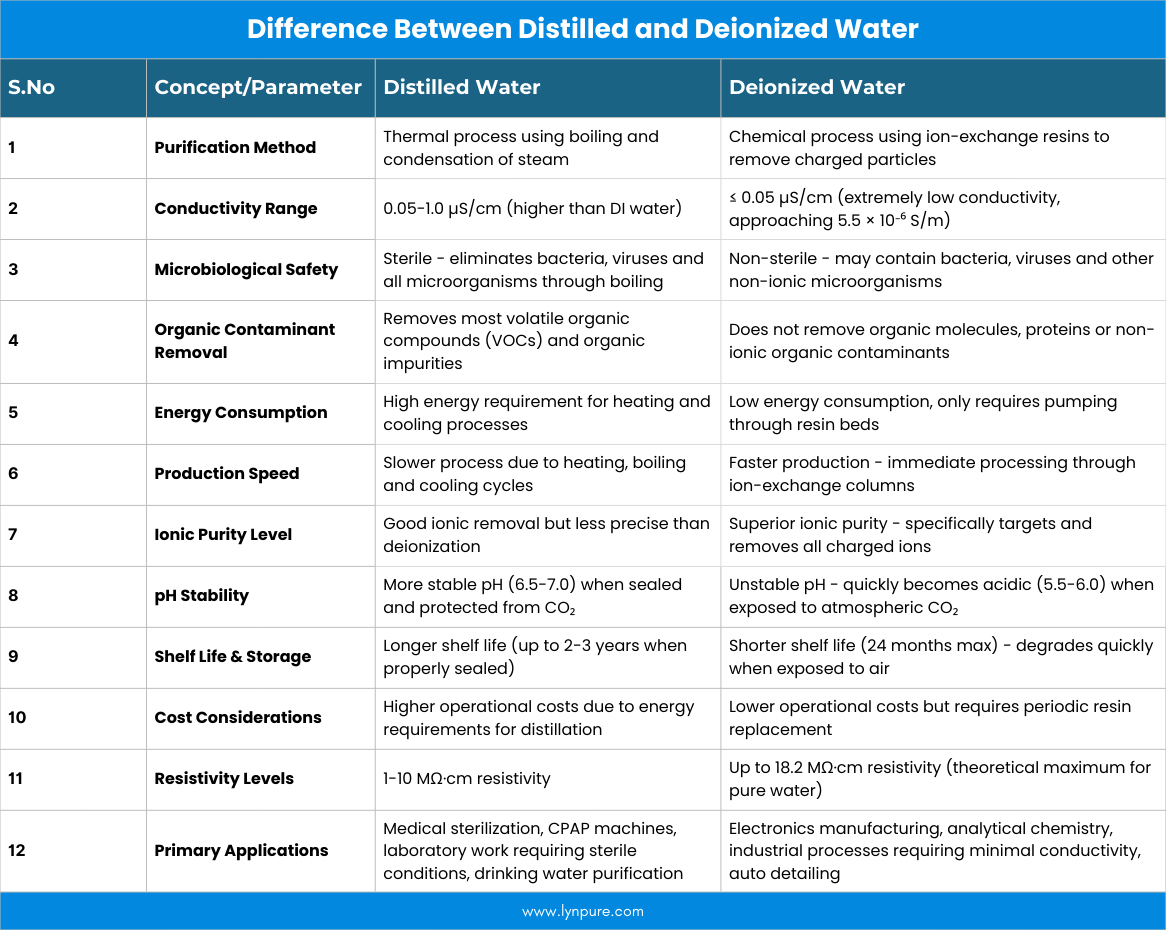 Distilled Water vs Deionized Water | Key Differences
Fun fact: deionized water is so “hungry” for minerals that it can actually leach tiny amounts of metal from pipes over time. So you definitely don’t want to drink it regularly—it’s not toxic, but it tastes flat and weird. Distilled water is fine for drinking, though it’s also pretty bland.
The Practical (and Weird) Uses
Ever wondered why people use distilled water for their CPAP machines or even baby formula? It’s because there’s zero chance of harmful minerals or bacteria. For your morning coffee, though? Stick with filtered tap water—pure water makes a sad, acidic brew.
Here’s a wild one: some aquarium owners use deionized water for saltwater tanks. Since it has no minerals, you can add exactly the right mix of salts yourself. It’s like building a custom pizza instead of eating a frozen one.
And if you’re into gardening, distilled water is great for ferns and carnivorous plants that hate tap water’s chlorine and calcium. Your Venus flytrap will thank you… right before it munches a bug.

