How To Work An Ice Maker
The first time I faced an ice maker, it felt like staring down a domineering robot from a 1980s sci-fi film. The panel blinked, the auger groaned, and I half-expected a synthe...
The first time I faced an ice maker, it felt like staring down a domineering robot from a 1980s sci-fi film. The panel blinked, the auger groaned, and I half-expected a synthesized voice to demand a sacrifice. We’ve all been there. But the humble ice maker isn’t a villain; it’s a misunderstood genius of modern convenience, ready to chill your morning matcha or your evening Negroni.
Let’s demystify the machine. At its core, the ice maker is a marvel of thermodynamics. It uses a motor, a water valve, and a heating element to freeze, release, and store ice in a cycle that takes roughly 90 to 180 minutes. Understanding this simple rhythm is the first step to becoming its confident master, not its baffled victim.
Before you think about flipping switches, check the water line. Is it connected? Sounds basic, but you’d be surprised how often we blame the ice maker for a dry pipe. If the machine is new, or if you’ve recently moved, run the water line for a few seconds to flush out any stale or dusty water.
Now, find the on/off switch—usually a metal arm or a small rocker switch located inside the freezer or lower compartment. Push it to “On.” If you see a red or green light, you’re golden. If nothing happens, don’t panic. The machine might be waiting for the freezer to reach the optimal temperature, which is typically zero degrees Fahrenheit or colder.
Here’s a cultural tip: Ice makers are the sous-chefs of the home bar. A well-functioning machine means you can host a cocktail party without that awkward, “Sorry, I only have two ice cubes left” moment. It’s the quiet enabler of good conversation.
But wait—what about the dreaded ice jam? This is the most common betrayal. You hear a grinding noise, but no cubes fall. This happens when cubes freeze together in the bin or when the auger gets stuck. The fix is deceptively simple: Empty the bin completely. Break apart any fused clumps with your hands (or a wooden spoon) and dump the old cubes.
Then, let the machine start fresh. It sounds like a waste of ice, but trust me—a clean bin is a happy bin. Fun fact: In Japan, ice is often carved into spheres to melt slower and not dilute premium whiskey. Your machine isn’t making spheres (yet), but you can still respect the process by keeping the ice pristine.
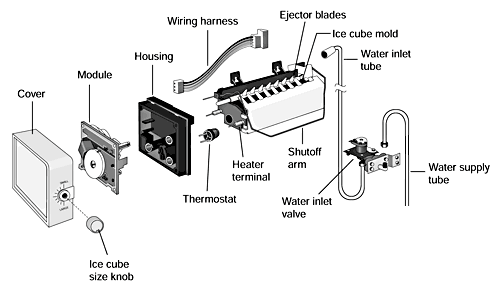
 Understanding How an Ice Maker Works: Schematic Diagram
Another practical tip: Change your water filter every six months. This is the single best thing you can do for your ice’s flavor. If your ice tastes like last week’s takeout, the filter is begging for mercy. Most filters are twist-off cylinders located behind the kickplate or inside the fridge.
Let’s talk about the ice maker’s personality. Some machines are loud, some are whisper-quiet. Some make crescent cubes, others make bullet-shaped or nugget ice. The nugget ice—beloved by Sonic Drive-In fans and dental surgery patients—is the rock star of the family. If your machine makes it, you are officially a luxury lifestyle blogger.
If your ice maker is a standalone unit (a single ice machine on your counter), remember it needs breathing room. Don’t cram it into a corner. It vents heat from the back or sides, and a suffocated machine makes weak, cloudy ice. Give it at least four inches of space on all sides.
Now, a word about cleaning. Imagine your ice maker is a tiny, hard-working hotel. It needs a deep clean every three months. Unplug it, remove the bin, and wash it with warm soapy water. For the machine itself, run a cycle with a mixture of white vinegar and water (half and half) to dissolve mineral scale.
Run two or three plain water cycles after to rinse. It’s a small chore that yields massive rewards: clear, crisp cubes that make your water taste like mountain spring. Fun fact: The ice from a clean machine has a higher melting point and stays colder longer.
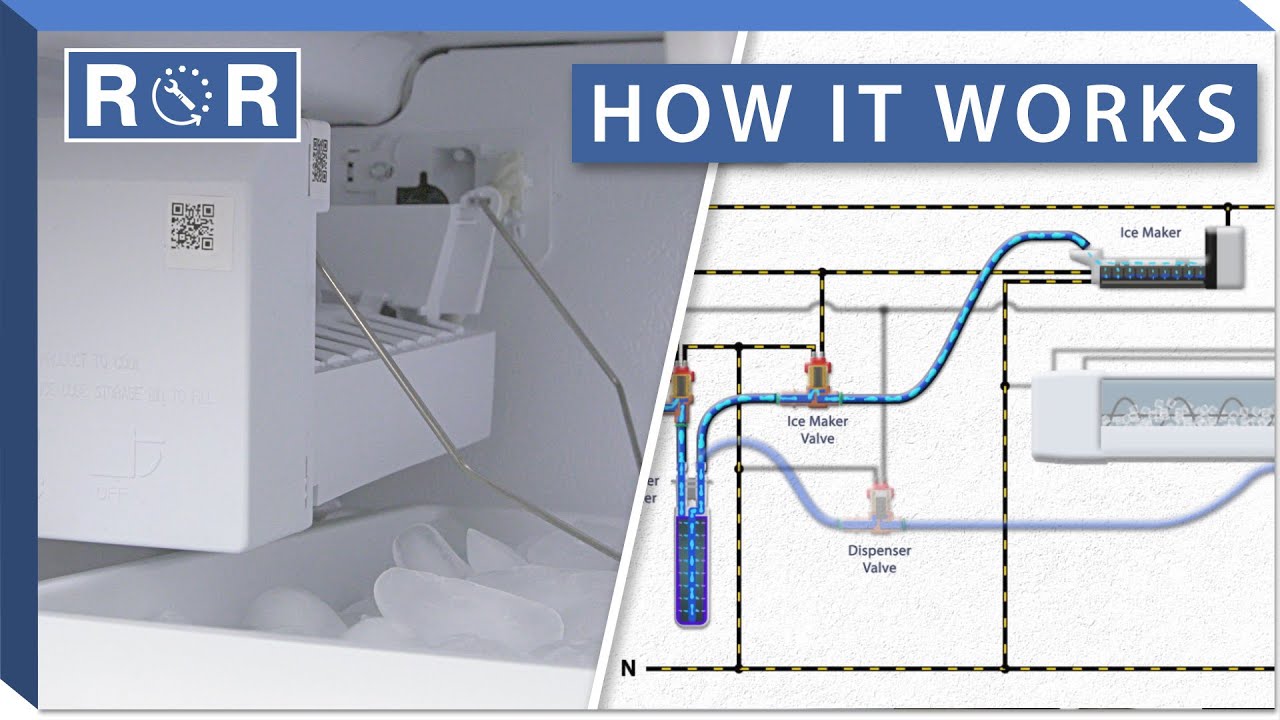 How Does The Ice Maker Work On A Lg Refrigerator at Saul Carroll blog
What about the arm? The metal arm that drops down to stop ice production? That is your ice maker’s brain. If you ever overfill the bin, raise the arm manually to stop the cycle—it’s faster than waiting for the machine to sense the pile. Just don’t force it. It’s delicate.
For the ultimate hack: If you want ice faster, set your freezer to a slightly colder setting for 24 hours. The machine will cycle more efficiently. But watch out—setting it too cold can freeze the water line. Balance is key, like knowing when to add a splash of soda to a single malt.
Cultural reference: In the 1996 film Fargo, the wood chipper gets all the attention, but it’s the ice maker that quietly symbolizes the mundane horror of a frozen world. More optimistically, think of it as the gentle Arctic bear in your kitchen, providing for you without drama.
Finally, a little reflection. The ice maker is a metaphor for daily life: it works best when you prepare for it, maintain it, and respect its boundaries. You can’t just demand ice; you have to give it water, space, and a clean filter. In return, it gives you the cool clarity to face any afternoon.
So next time you hear that satisfying clunk of cubes dropping, take a moment. That sound is proof that small, consistent efforts lead to small, perfect rewards. Pour yourself a glass, add three cubes, and enjoy the chill of a machine that truly has your back.