
Here’s where your brain might do a little somersault. NASA and SpaceX usually announce the splashdown time in Eastern Daylight Time (EDT), because the landing happens off the Florida coast. That’s five hours behind the UK. So, if the official time is “1:00 AM EDT,” you just add five hours—boom, 6:00 AM BST. But wait, there’s a twist: NASA constantly updates the time, often by hours, depending on weather and orbital adjustments. Checking the time the morning of is your only safe bet.
And get this—the exact second of splashdown is a moving target. The astronauts can’t just say, “Be there at 3:47.” The station shifts its orbit slightly every few weeks to avoid space junk (yes, literal garbage flying at 17,000 mph). So the time might wobble by 15 to 30 minutes even in the final 24 hours. Prepare for a thrilling game of “will they, won’t they” that makes British trains look punctual.
What Actually Happens at That Ungodly Hour?
Imagine you’ve just been fired out of a cannon from space. The capsule hits the atmosphere at 25 times the speed of sound, and the outside temperature hits 1,930 degrees Celsius. That’s hot enough to melt steel, yet the astronauts inside are sipping cool water. Then, two massive parachutes deploy, and the capsule goes from Mach 25 to a gentle 15 mph in about ten minutes. It’s like the most aggressive elevator ride of your life, followed by a sudden, watery stop.
The actual landing is a “splashdown,” which sounds fun but is actually a violent thud. The capsule belly-flops into the Atlantic, and the crew often goes from pulling 4 Gs to floating inside a bobbing bathtub. If you’re watching the live feed at 3:00 AM UK time, you’ll see a bunch of boats zooming toward a charred, hissing capsule in the dark. It’s both terrifying and beautiful, like a fireworks display designed by a mad scientist.
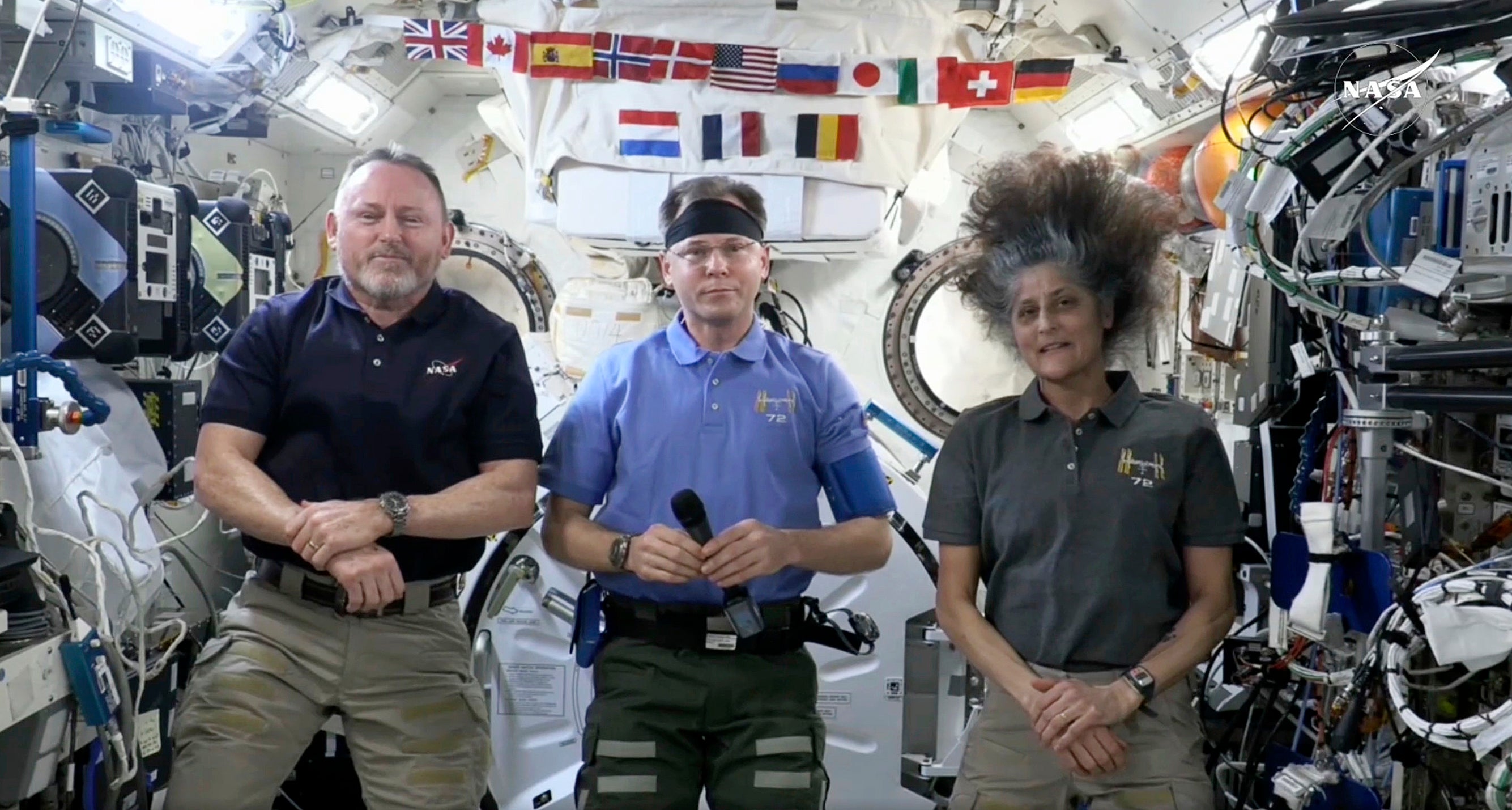 Stranded Nasa astronauts to finally return to Earth after nine months
Here’s a surprising fact you can drop at the next pub quiz: The astronauts are often in higher G-force on the way down than they are on the way up. The rocket ride is a smooth 3.5 Gs, but the re-entry braking can hit a tooth-rattling 4.5 to 5 Gs. Imagine a giant invisible hand pushing your face into a pillow for a full minute. That’s their morning commute into your late-night viewing.
The Real Problem: Tea and Satellite Signals
For UK viewers, the biggest challenge isn't the time but finding the live stream. NASA and SpaceX broadcast on YouTube and X, but if you’re in a sleepy British village with “rural broadband,” you might be watching a pixelated green blob instead of a spaceship. My advice? Download the NASA app the night before and pray your Wi-Fi holds up. Alternatively, BBC News sometimes cuts in with a live feed, but they’ll probably interrupt it for a report on a wayward badger.
And whatever you do, don’t rely on your “smart” TV’s browser. It will crash at the exact moment the parachutes deploy. I’ve seen it happen. The capsule could be splashing down and your telly is still buffering the ad for a triple-glazing company. Use a laptop. Or a tablet. Have a backup. Your sanity depends on it.
:max_bytes(150000):strip_icc():focal(726x305:728x307)/moon-artemis-astronauts-crew-011326-566b615a56f743a1b59e5c696829df25.jpg) Astronaut Landing Time
Astronaut Landing Time
The Unofficial UK Viewing Guide
So, say the splashdown window is officially 4:00 AM BST. Here’s your survival kit: brew a thermos of strong tea (none of that herbal nonsense), grab a packet of Hobnobs, and set two alarms—one at 3:30 AM to wake up, and another at 3:55 AM in case you fell back asleep. Then, open the NASA livestream early, because they usually start coverage an hour before splashdown. You’ll watch nothing but a bunch of mission control nerds pushing buttons for 45 minutes, but that’s part of the charm.
Also, prepare for delays. They might call off the landing entirely if a single cloud is in the wrong spot. The weather gods in Florida are fickle. I once waited three hours for a Dragon capsule to land, only for them to abort because of “wind shear.” I had to call in sick to work the next day. True story. But when the capsule finally hits the water, and you see the astronauts wave from the recovery ship, you’ll feel a stupid, irrational pride. You were there. At 5:17 AM. In your pyjamas. And you didn’t miss a thing.
In summary: check the NASA website at 10 PM the night before, add five hours, and cancel your morning plans. The exact time is a cosmic surprise. But one thing’s for certain—when those astronauts finally open the hatch, you’ll be grumpy, sleep-deprived, and utterly delighted. That’s the British way to watch space travel.

