Now, you might think, “Surely, there’s a good reason.” And you’d be right. Either the evidence evaporated faster than a pint in a heatwave, or someone realized they had the wrong bloke. Mistaken identity is the most hilarious culprit here.
Imagine the scene. Officer: “You! You caused this crash!” Guy: “No, I was reading a book in the back seat while my wife drove.” Officer: “…Right. Sorry. Have a biscuit.” It’s the kind of gaffe that makes you wonder if they accidentally arrested the guy who gave them directions instead of the guy who did a wheelie into a lorry.
Another possibility? The guy was so annoyingly innocent that his continued arrest was going to cause a bigger headache for the police than just letting him go. You know the type—the bloke who demands to see the manager of the police force. Sometimes, it’s easier to just un-cuff him and pretend it didn’t happen.
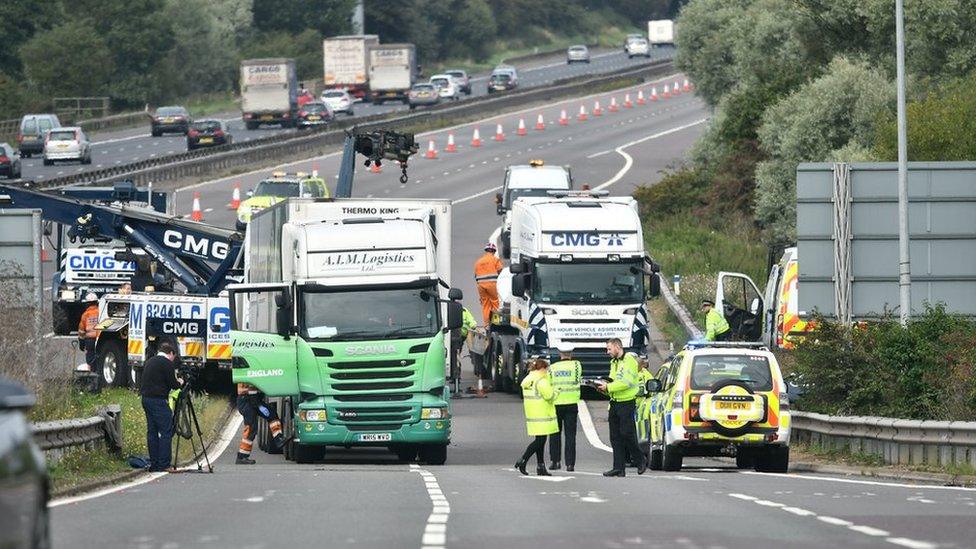 Lorry drivers charged over M1 fatal crash - BBC News
This is surprisingly common—and legally wild
Here’s the surprising fact that will make you the star of your next coffee break: De-arresting is actually a real thing. It’s not a prank. In police jargon, it’s called “cancelling the arrest” or “releasing without charge.” About 25% of all arrests in the UK don’t result in a charge. That’s one in four people getting a free ride in the back of a police car and then a polite “Thanks for your time.”
Think about that. Every time you hear sirens, there’s a one-in-four chance that someone is about to get the world’s most stressful Uber ride followed by a bewildered apology. It’s the ultimate “my bad” from the boys in blue.
This particular M1 guy is now a member of a very exclusive club. He’s been arrested, de-arrested, and will probably dine out on this story for the next decade. “Remember that time I was arrested for a three-car crash? Oh, they let me go. Said it was a mistake.” Legend.