
Here’s where it gets wild: the placenta situation matters. If the twins shared a placenta—called monochorionic twins—the risk for the survivor is higher than if they had their own. Why? Because blood vessels might form a dodgy connection, like a bad Wi-Fi signal.
When one twin dies, that shared network can cause a sudden drop in blood pressure for the survivor. That’s why doctors might deliver the baby early or use laser surgery to untangle things. It sounds scary, but remember: your medical team has seen it all—they’re basically brain surgeons for womb-dwelling superheroes.
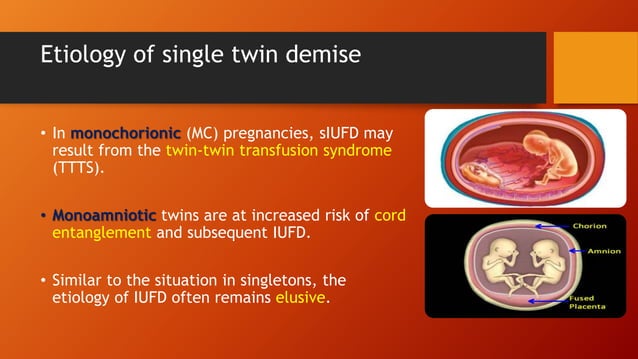 Management of twin pregnancy with single fetal demise; Obstetrics
What About Mom’s Body?
Your body is a total champ—it knows what to do. If the twin dies early, the tissue is reabsorbed, and you might have a tiny spot of blood or no symptoms at all. Later in pregnancy, the body might trigger labor or just carry the surviving twin to term like a boss.
One weird fact: mom’s hormones can go a little haywire, causing mood swings—seriously, don’t blame yourself. Your body is literally managing two sets of “to-do lists” and cancelling one last-minute. Give yourself a break, and maybe eat that extra cookie.

