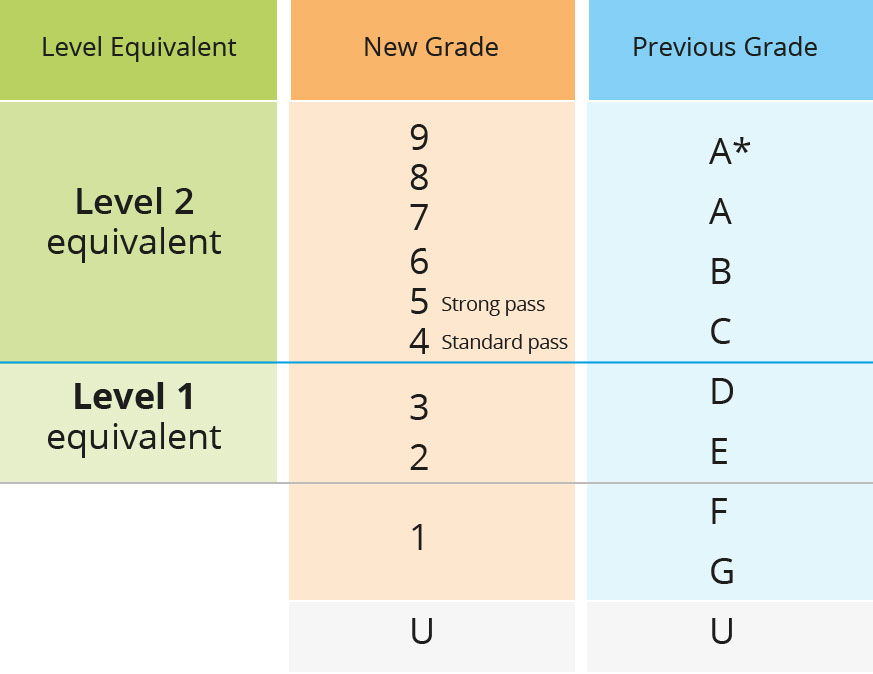
Think of grades like levels in a video game. A grade 1 is like the tutorial—you barely started. A grade 9 is like beating the final boss on hard mode. Grade 4 is the point where you’ve learned enough to play the next game. Grade 3? You’ve collected some coins and defeated a few enemies, but you’re not quite ready to move on to the next world.
The exam boards (the people who write the tests) decide where the line is. They look at all the results and say, “Right, a 4 means you’ve shown solid understanding.” A 3 means you’re close, but missing some key bits. It’s not a failure—it’s a “not yet”.
 Understanding GCSE Grades
Fun Comparisons to Keep You Sane
Ever tried learning a new dance move? A pass is like getting the basic steps right. You can still do the shuffle, but you won’t win a competition. A grade 9 is like being a pop star’s backup dancer—flawless and impressive. Meanwhile, a grade U (ungraded) is like showing up to the dance with the wrong shoes on—you tried, but it didn’t work out.
Another one: think of a grade 4 as a “renting an apartment” grade. It’s functional, gets the job done, and you can live there. A grade 7 is like owning a house with a garden—awesome, but not necessary for survival. And a grade 5? That’s the sweet spot, like a cozy flat with a nice view—comfortable and a little extra.

