
What Paint Does Bob Ross Use
So, you’re finally ready to paint some happy little trees. You’ve got your canvas, your easel, and a dream. But then you stare at the paint aisle and think, “What would Bob do...
So, you’re finally ready to paint some happy little trees. You’ve got your canvas, your easel, and a dream. But then you stare at the paint aisle and think, “What would Bob do?” Don’t panic. I’ve got the scoop.
First things first: Bob Ross used oil paint. Not acrylics. Not watercolors. Oil. That’s the secret sauce for his wet-on-wet technique. It stays wet, stays workable, and lets you blend a mountain into a cloud without screaming.
Bob didn’t just grab any old oil paint. He used a brand called Bob Ross Inc., obviously. The man had his name on the tubes. But here’s the kicker: the actual manufacturer was Martin/F. Weber Co. Fancy, right? They mixed the colors specifically for his TV show.
You can still buy these paints today. They’re sold as the Bob Ross Master Set or individual tubes. They’re a bit thicker than standard oils. That thickness helps the paint hold a knife stroke like a proud little ridge.
Now, let’s talk colors. Bob didn’t use a rainbow. He used a core palette of about 10 to 12 shades. Think of it as his secret handshake. For example, Phthalo Blue and Alizarin Crimson are non-negotiable.
You’ll also need Prussian Blue for those deep, dark skies. Then there’s Cadmium Yellow for sunlight poking through the leaves. And don’t forget Sap Green—the star of every happy forest.
Bob’s famous for white paint. Titanium White is his best friend. He used it to mix highlights, create clouds, and cover up mistakes. “We don’t make mistakes,” he’d say. “We just buy more Titanium White.”
What about black? Bob hated black paint. He literally said it’s “too dark and dead.” Instead, he mixed Van Dyke Brown with Phthalo Blue to get a rich, living black. So ditch that tube of ivory black. You’re better than that.
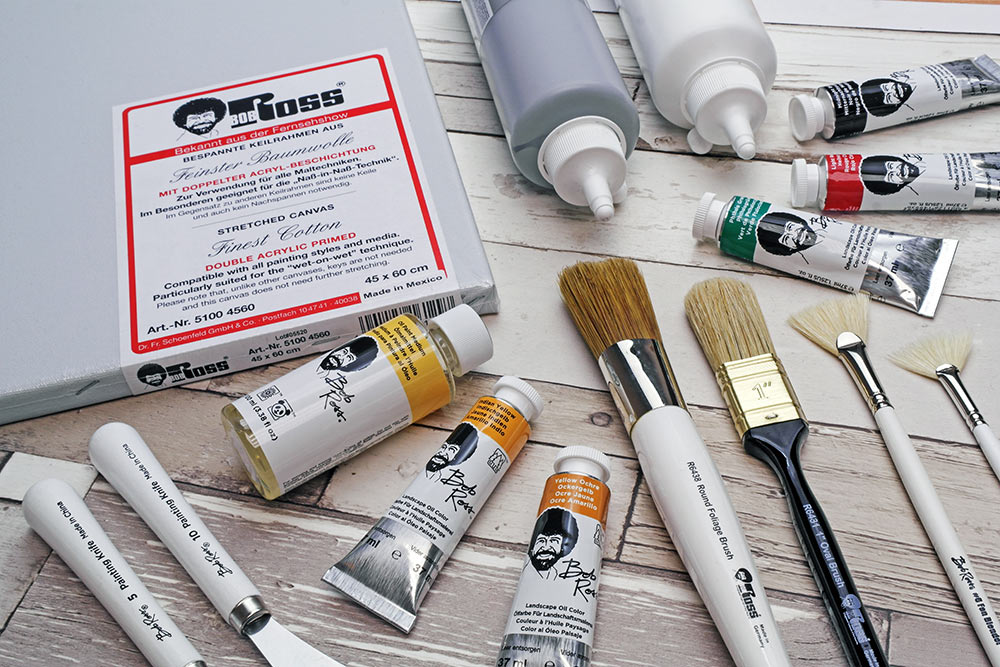 Bob Ross Oil Painting Techniques Bob Ross Style Double Mountain Oil
Here’s a fun fact: Bob used a liquid white base coat. It’s a special medium, not paint. It’s a mixture of linseed oil and titanium white. You brush it on the canvas first to make everything slippery and blendable.
You can buy Bob’s official Liquid White online. Or you can be a rebel and make your own with 50% linseed oil and 50% white paint. Bob would probably say, “That’s your happy little secret.”
The paints come in 37ml tubes. That’s small, but a little goes a long way. Bob used a tiny dab for a whole mountain range. He was a miser with paint, but generous with joy.
Now, a word of caution: Bob’s paints are alkyd-based. That means they dry faster than traditional oils. Not instant—like, overnight instead of three days. Perfect for impatient painters like me.
Are these paints expensive? Erm, yes. A set of six tubes can run you $40 to $60. But consider this: you’re buying a piece of TV history. Plus, one painting session uses so little paint that each tube lasts for months.
You might wonder, “Can I use another brand of oil paint?” Absolutely. Bob would nod and say, “That’s just fine.” Just find a brand with heavy body oils. Brands like Gamblin, Winsor & Newton, or even Utrecht work great.
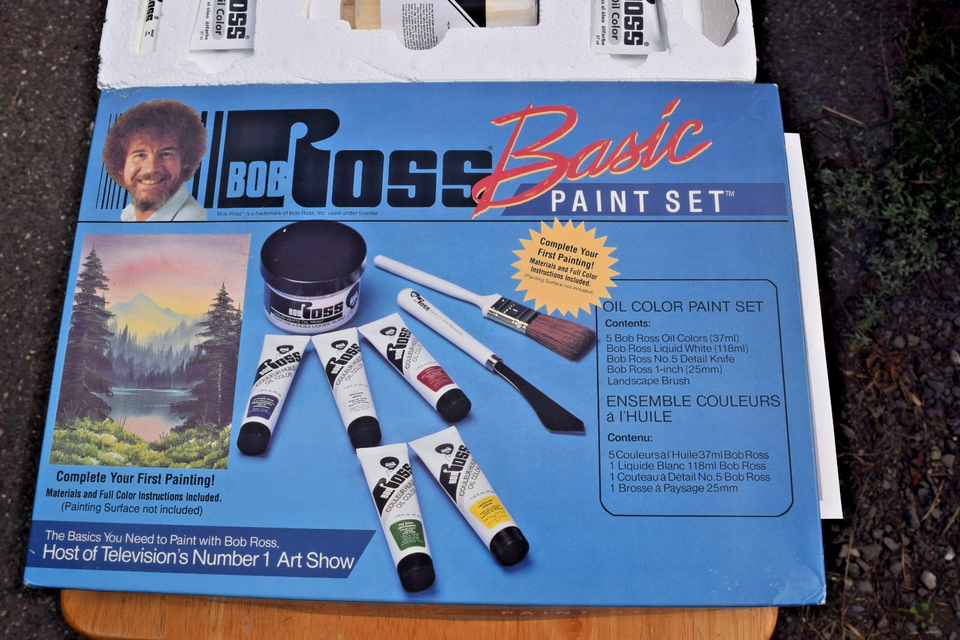 Bob Ross Basic Oil Color Paint Set R6505 5 Colors Tools Instructions
The trick is getting the consistency right. Regular oils can be too runny. If they drip, add a little Liquin or Stand Oil to thicken them up. Bob’s paints are already stiff, so you want that same buttery feel.
What about brushes? That’s a whole other coffee chat. Just know Bob used 2-inch and 1-inch flat brushes and a tiny script liner for details. And keep them clean—he used paint thinner and a double-check in soapy water.
Oh, and palette! Bob used a wooden palette. But you can use a glass one or a paper pad. Just don’t use plastic—oil paint eats plastic over time. You’ll get a gooey mess.
So, to sum up: Bob Ross used oil paints from Martin/F. Weber Co., sold under his own brand. He relied on a tight palette of 10 colors, plus Liquid White. And he avoided black like a villain.
Your homework? Buy a small set online. Watch an episode. Squeeze a bit of Alizarin Crimson onto your palette. Then paint a happy little tree. It doesn’t have to be perfect. Bob never painted perfect. He painted happy.
And if you mess up? Just call it a “happy accident.” Then grab more Titanium White. You’ve got this, pal.

