
Get Rid Of Tea Stains In Mugs
So there I was, staring into the abyss of my favorite mug—the one with the chipped rim and the faded quote from a cartoon. It wasn’t just empty; it was haunted by a dark, stub...
So there I was, staring into the abyss of my favorite mug—the one with the chipped rim and the faded quote from a cartoon. It wasn’t just empty; it was haunted by a dark, stubborn ring that looked like a crime scene from a coffee noir novel. Tea stains, my arch-nemesis, had struck again.
I tried the old “just scrub harder” trick until my knuckles turned white. The stain just laughed at me, clinging to the ceramic like a bad memory. Sound familiar?
But here’s the thing: you don’t need to wage a war with bleach or throw that mug in the trash. Getting rid of tea stains is actually weirdly satisfying once you know the right tricks. Let’s roll up our sleeves (metaphorically, unless you’re into that) and get this over with.
The secret sauce? Baking soda. Yes, the same stuff you use to deodorize your fridge or make a science fair volcano. Grab a damp sponge or a brush, sprinkle a little baking soda right onto the stain, and scrub gently. It’s like magic, but cheaper and less likely to summon a demon.
If the stain is being a real jerk—like, the kind that survived a dishwasher cycle—try salt and vinegar. Mix a tablespoon of salt with a splash of white vinegar to make a paste. Rub it in circles with your fingers (or a toothbrush if you’re fancy), and watch the stain dissolve like my willpower at a brunch buffet.
Another trick: lemon juice and salt. This combo is basically the Avengers of kitchen cleaning. Squeeze half a lemon into the mug, add a pinch of salt, and swish it around. The acid cuts through the tannins—the actual culprit behind those brown ghosts—while the salt acts like tiny scrub grenades. Wash, rinse, and boom—crispy clean.
For the truly stubborn stains—the ones that have been there since the Obama administration—try denture cleaner. Yes, for false teeth. Drop one tablet into the mug, add hot water, and let it fizz for ten minutes. Trust me, it’s weird but works like a charm. The stains just release their grip like a teenager giving up a video game controller.
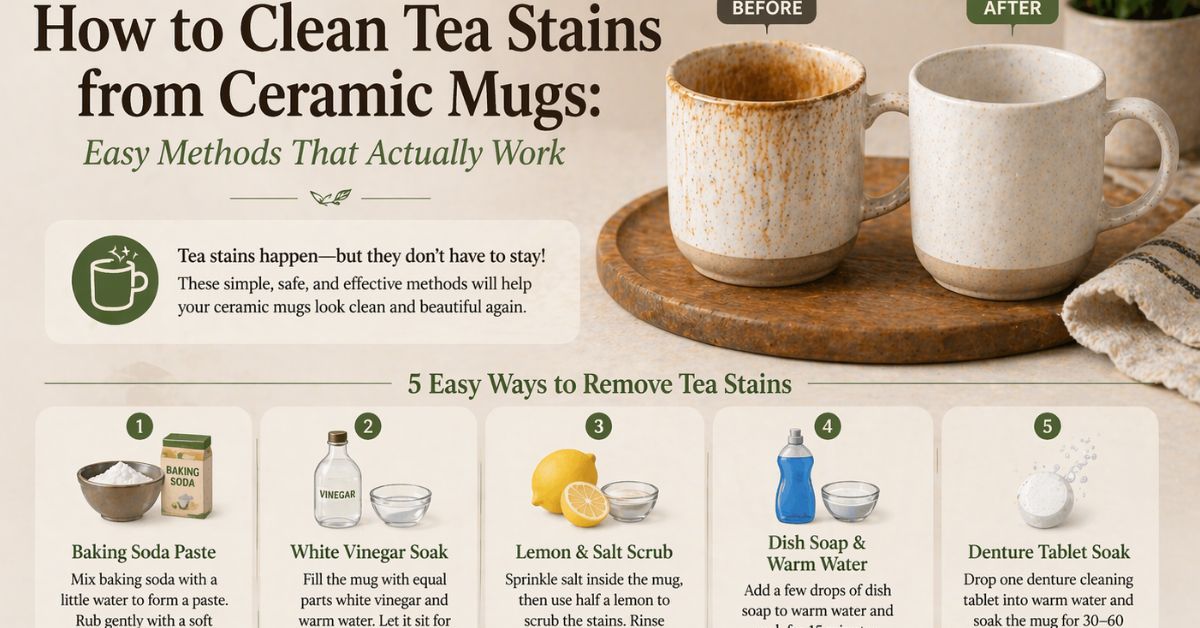 How to Clean Tea Stains from Ceramic Mugs: Easy Methods That Actually Work
Now, here’s where I get a little salty: avoid bleach. I know, it’s tempting—it bleaches everything, right? Wrong. Bleach can react with the tea residue and actually set the stain deeper, turning your mug into a permanent art project. Plus, nobody wants a sip of bleach-flavored Earl Grey. No thanks.
What about the dishwasher, you ask? Don’t rely on it. Dishwashers are great for plates, but tea stains are like ninjas—they hide in the microscopic pores of ceramic. The heat can actually bake the stain in, making it harder to remove later. Hand-scrubbing is your ally, even if it feels like a chore from the 1800s.
Quick hack for prevention: rinse your mug immediately after drinking. I know, I know—you’re busy, you’re distracted, the cat just knocked a plant over. But a quick swirl of hot water from the tap can save you fifteen minutes of scrubbing later. Future you will thank present you.
Another pro tip: avoid using abrasive metal scrubbers. They’ll scratch the glaze, and those scratches are like welcome mats for new stains. Stick with non-scratch sponges or a soft brush. Treat your mug like the royalty it is—or at least like the trusty sidekick it’s been through a thousand bad mornings.
 Why Does Tea Stain Cups at Dollie Guth blog
Let’s talk about white vinegar for deep cleaning. Fill the mug with equal parts vinegar and water, then microwave for one minute. Warning: your kitchen will smell like a pickle factory, but the steam will loosen the stain. Scrub it immediately afterwards, and you’ll get a finish so clean you could eat cereal from it. Cereal in a tea mug—don’t judge me.
If you’re feeling extra fancy, try the dishwasher tablet hack. Crush a tablet (the kind you use for your machine) into a powder, add a few drops of water to make a paste, and let it sit on the stain for ten minutes. Rinse, and you’ll get the same results as a trip to the hardware store. Just don’t eat the powder—please.
One more thing: the power of patience. Some stains are just stubborn and need a second go. Apply the paste, let it sit for twenty minutes, then scrub again. It’s not a race—it’s a relationship you have with your mug. And relationships take work.
So the next time you see that brown ring staring back at you, don’t panic. Grab your baking soda, your vinegar, or your lemon, and remember: you’re smarter than a stain. It doesn’t have to be a war—it can be a small, satisfying victory that makes your morning coffee taste even sweeter. Cheers to that.

