Let’s get practical. A modern smartphone with fast charging (like 18W to 30W) can hit 50% in about 30 minutes. That’s enough to get you through a morning commute or a Netflix episode. A full charge? 75 to 90 minutes. Laptops are slower: a typical ultrabook takes 1.5 to 2.5 hours to fully charge, though some gaming monsters might stretch to three. Wireless charging? Add 30-50% more time—convenient but slower, like taking a scenic route instead of the highway.
For electric cars, it’s a whole different story. A Level 2 home charger can take four to eight hours for a full battery. A Tesla Supercharger can get you to 80% in 30-40 minutes, but again, that last 20% crawls. If you’ve ever sat at a fast charger watching your range creep up at 1% per minute, you know the feeling of “range anxiety” turning into “I should have brought a book anxiety.”
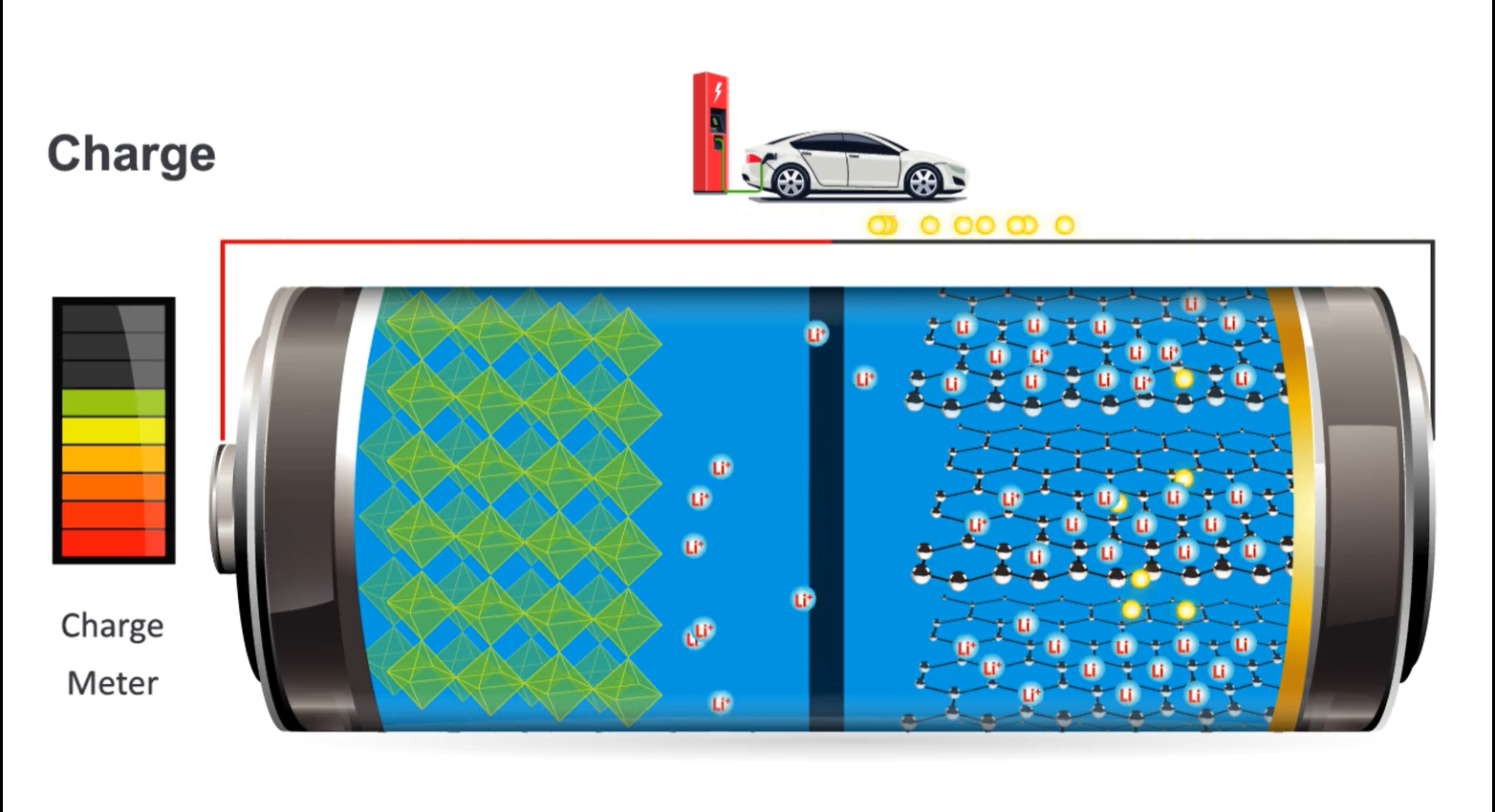 Charging and Discharging of Lithium-Ion Battery
The Golden Rule: Partial Charges Are Your Friend
Here’s the secret that battery engineers wish everyone knew: you don’t need to charge to 100% every time. In fact, it’s better for the battery to stay between 20% and 80%. Think of it like your own energy levels—running on empty all the time is bad, but constantly being stuffed full is also unhealthy. If you charge your phone overnight, it might hit 100% and then stay there for hours, slowly stressing the battery. Modern phones have “optimized charging” that learns your schedule and delays full charge until morning. Use it. Your battery will thank you with a longer life.
I once left my laptop plugged in for a month. It started swelling like a sad balloon. Don’t be me. Unplug when you can, and avoid letting it drop to zero percent regularly. That deep discharge is like a hangover for lithium-ion—they recover, but it hurts them a little each time.