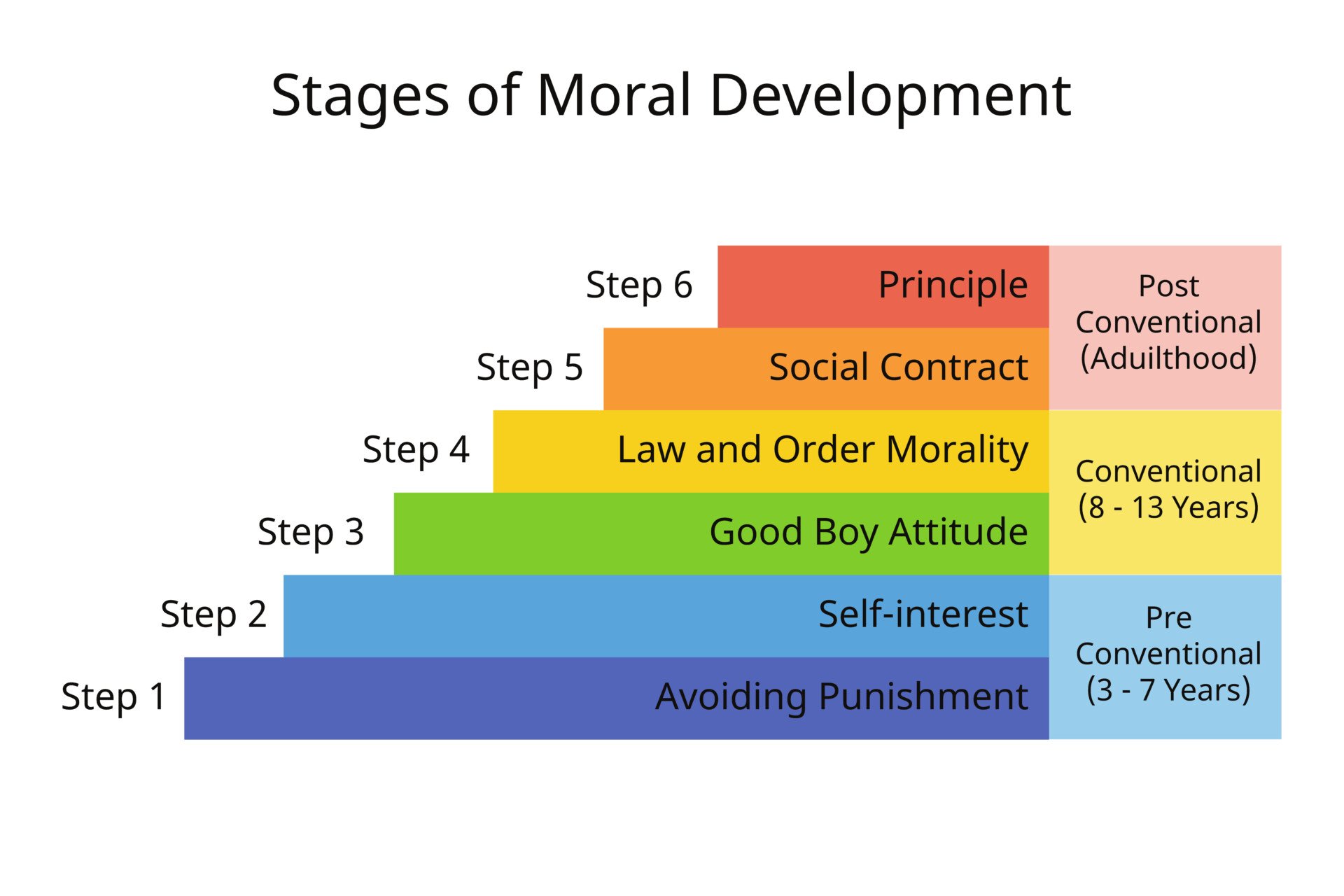
As we climb up the staircase, we reach the conventional stage, where we start to think about how our actions affect others, and we want to do what's right to maintain social order. It's like we're playing a game of social chess, where we need to think about how our moves will impact those around us. But, have you ever stopped to think about what drives our moral compass?
One of the key players in moral development theory is Lawrence Kohlberg, who identified six stages of moral development. He said that we progress through these stages as we mature, and that each stage represents a more advanced level of moral reasoning. It's like a moral puzzle, where each stage adds a new piece to the picture.
So, what's the next stage after conventional? We have the post-conventional stage, where we start to think about universal principles, like justice and equality. It's like we're looking at the bigger picture, and we want to do what's right, not just because it's what's expected of us, but because it's what's morally just. But, how do we get to this stage, and what does it take to become a moral leader?

