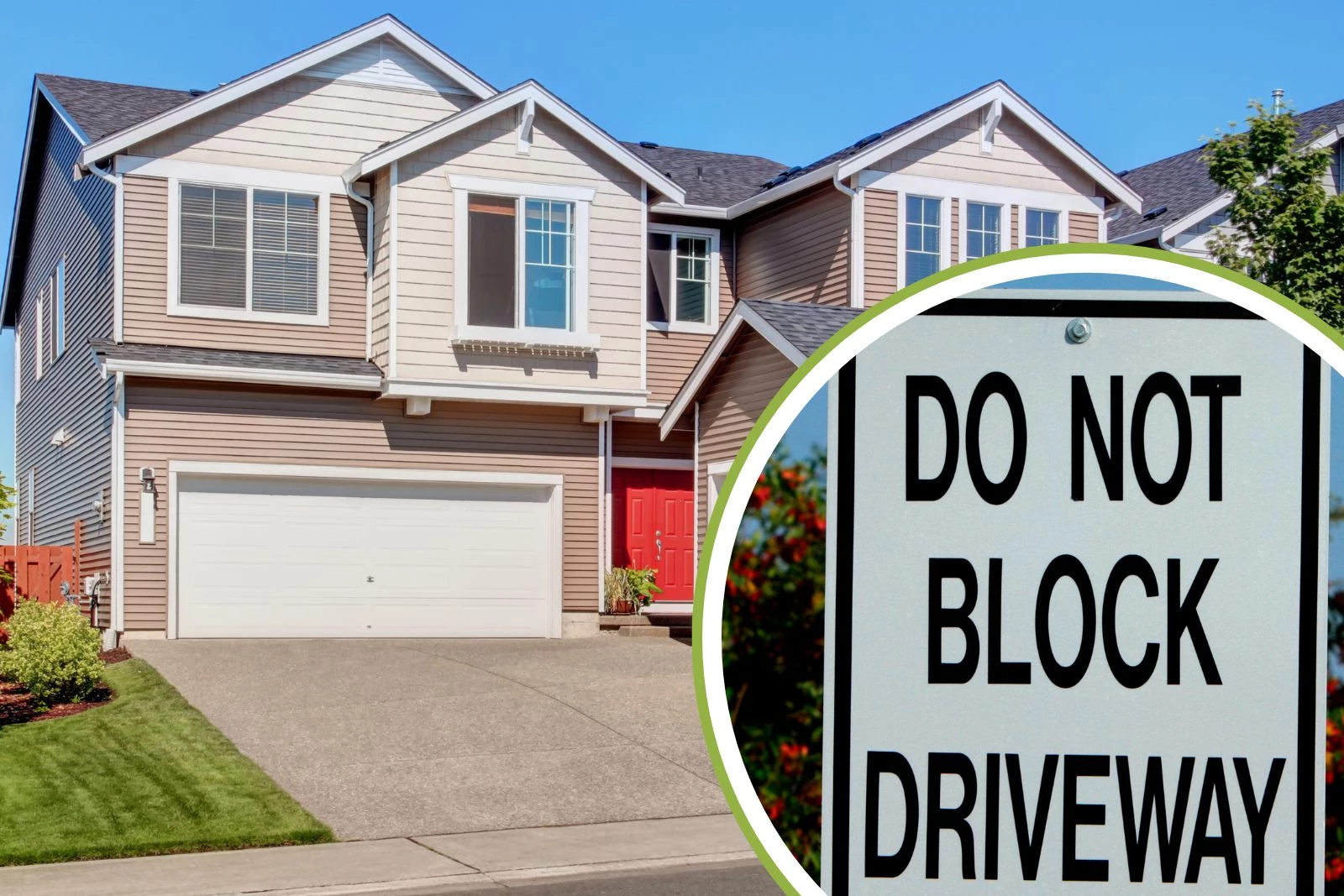
First off, the core rule is universal: you cannot block access to a driveway. This isn't just about being polite; it's about safety and practicality. Think about it—if an ambulance needs to get to someone’s house, that driveway is their only path.
Your cute little sedan becomes a literal roadblock. It’s not just inconvenient for the homeowner; it’s a potential life-safety hazard. I know, I know—you were “just grabbing a coffee” (spilled, remember?), but the law doesn’t care about your latte.
But What About “Blocking” vs. “Parking In Front?”
Here’s where it gets a bit tricky, and you can maybe feel a tiny bit smug again—but only if you’re precise. The law often hinges on the definition of “blocking.” If your car is overhanging the driveway’s curb cut, even by a few inches, you are legally blocking it. Period.
But what if the driveway is super wide, and you’re parked entirely on the public street, with your wheels not covering the sloped part? In some specific cities or neighborhoods, if the curb cut is shallow, you might be technically legal. Don’t get your hopes up.
Local ordinances can be weirdly specific. For instance, in some parts of Los Angeles, they measure from the edge of the driveway’s pavement. In New York, it’s from the curb line. You’d need a geometer’s license to be sure.

