
But wait—size isn’t just about square miles, is it? For most of us, a “big” airport means a place where you need a train to get from security to your gate. A place where your gate number has three digits. That’s where Hartsfield-Jackson Atlanta International Airport comes in and steals the spotlight. It’s not the largest by land, but it is the busiest airport in the world by passenger traffic. Year after year, it crushes the competition.
Atlanta handles over 100 million passengers annually. Imagine every person in Canada passing through one single set of terminals. It’s organized chaos, a constant human river. You’ll walk miles—seriously, bring comfy shoes—and the sheer number of gates (over 190) means you can’t just glance around. You need to commit to your terminal like it’s a long-distance relationship.
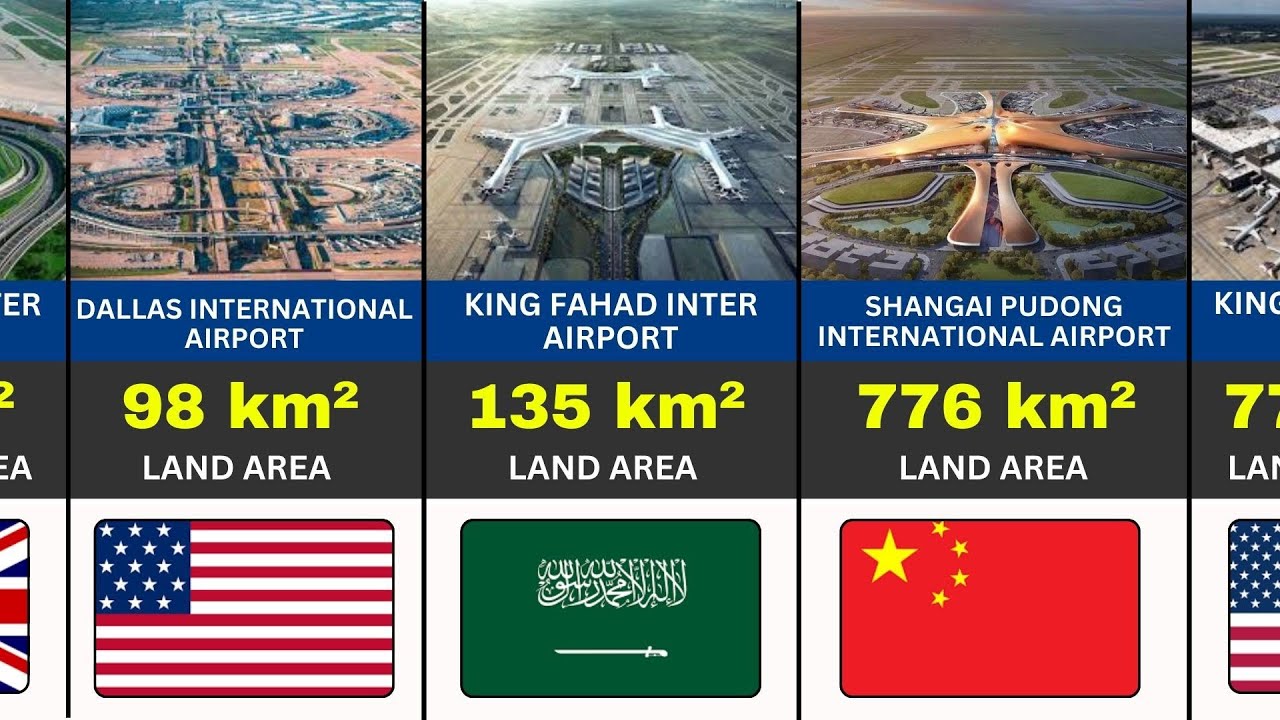 50 BIGGEST Airports In The World 2026. - YouTube
But What About the Glitzy Mega-Hubs?
Of course, you’ve got the glamour giants too. Dubai International Airport is a beast, famous for its sheer scale and luxury shopping, but it’s still smaller in land area than King Fahd. And then there’s Beijing Daxing International Airport, the starfish-shaped marvel opened in 2019. It’s huge, sure, but it’s not the single biggest. It’s more like the most architecturally ambitious, designed to handle up to 100 million passengers eventually. You could spend a whole layover just staring at the skylights and wondering if you’re in a sci-fi movie.
So, who wears the crown? It depends on your definition. Do you want the airport that could swallow a small country? That’s King Fahd. Do you want the one that feels like a never-ending conveyor belt of humanity? That’s Atlanta. Both are jaw-dropping in different ways.

