
Ready for the twist? Saint George wasn’t from England. He wasn’t from Portugal, Germany, or anywhere in Western Europe. The real George was born around the third century AD in Cappadocia, which is modern-day Turkey. Yes, the patron saint of England was a Turkish soldier who never set foot on British soil.
He grew up in a Christian family during the Roman Empire’s heyday. That’s right—George was a Roman army officer, not a medieval knight with shiny armor. His day job involved following orders from Emperor Diocletian, a guy who was famously not a fan of Christians.
So how did a Turkish Roman soldier become the international symbol of courage and dragon-slaying? Well, that’s where history gets gloriously messy—and way more interesting.
The Legend Grows (and Travels)
George’s fame exploded after he refused to persecute Christians and was martyred for his faith. His story spread like wildfire through the Byzantine Empire, then hopped a ride with Crusaders heading home to Europe. By the time it hit England, locals had added the dragon—a classic symbol of evil—to his resume.
King Richard the Lionheart, ever the PR genius, declared George the patron saint of England during the Crusades. It was a brilliant move: who wouldn’t rally behind a warrior saint who killed a dragon? Suddenly, a Turkish Roman soldier was the beloved icon of a rainy island he’d never seen.
Here’s the kicker: other countries claim him too. Portugal, Ethiopia, Georgia, and even parts of Russia all have their own versions of George. He’s like the Beatles of saints—everyone wants a piece of the legend.
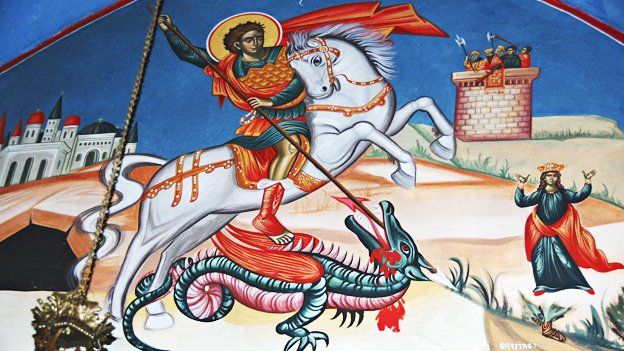 St George's Day: Who was England's patron saint? - BBC News

