
You’ll hear people call Sicilian “a dialect of Italian,” but that’s mostly politics and history. Italian is the standardized language of a unified nation; Sicilian is the organic, messy, heart-centered tongue of the island. They are not mutually intelligible. Try speaking pure Sicilian to a Milanese person, and you’ll get the same blank stare I got from that nonna in Catania.
 Sicilian vs Italian Language: 5 Reasons Natives Can't Understand Each
And here’s a little irony for you: many Sicilian grandmas hate when outsiders try to speak it. They see it as their secret code, a warm blanket of home. But if you learn just one word—say, “beddu” (beautiful, for a man) or “bedda” (for a woman)—they’ll melt. One word can open a door that a hundred Italian sentences cannot.
Wait, Are There Other Languages in Sicily Too?
Oh, absolutely. In the depths of the province of Enna, you might hear Arbëreshë, an Albanian language spoken by descendants of 15th-century refugees. Travel to the town of San Fratello, and you’ll stumble upon Gallo-Italic, a dialect that sounds more like a missing cousin of Ligurian than anything Sicilian. And in the south, near Ragusa, there are tiny pockets of Greek-inspired idioms that survived for centuries.
I’m not kidding—you can drive forty minutes and feel like you’ve crossed three borders. Sicily is a linguistic honeycomb, and every cell buzzes with a different history. It’s the most multilingual place you’ve never thought about.
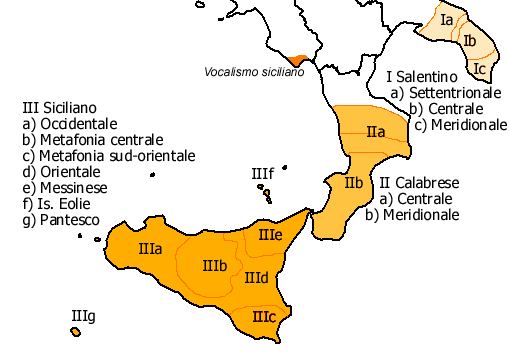 Sicilian language - Alchetron, The Free Social Encyclopedia

