
Now, Whole Wheat Flour is the flour that tries harder. Because the entire wheat kernel is ground up—bran, germ, and all—it packs fiber, protein, and a nutty, toasty flavor that makes your kitchen smell like a farmhouse bakery. But it’s also thirsty. Whole wheat absorbs more liquid, so it can make your cookies dense if you don’t treat it right.
Don’t be intimidated! That density is your chance to experiment. Swap half the all-purpose for whole wheat in your banana bread, and suddenly you’ve got a snack that feels rustic and responsible. Add a splash of buttermilk or an extra egg, and bam—your bread is hearty, not heavy. You’re not a baker; you’re an alchemist.
The Blending Magic (This is the Fun Part)
Here’s the plot twist you didn’t see coming: the best flour is a blend of both. Use a 50/50 mix for pancakes that taste like a hug. Or try 75% all-purpose and 25% whole wheat for a chocolate cake that fools even the pickiest eaters. You get the fluff of white flour with the soul of whole grain.
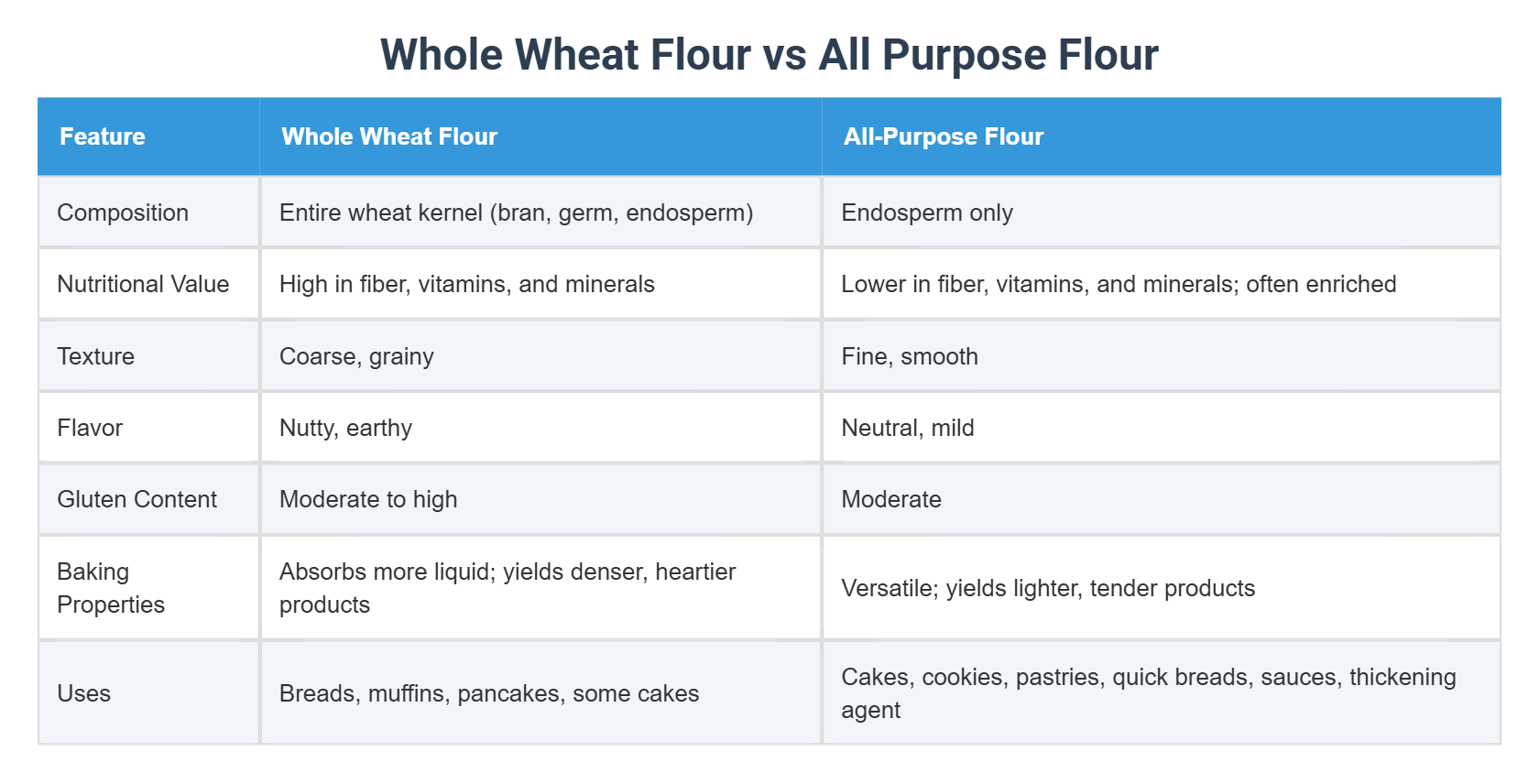 Whole Wheat Flour vs All Purpose Flour
Why settle for one when you can have both? Think of it like a buddy cop movie: the all-purpose is the slick, charming detective, and whole wheat is the rule-bending rookie. Together, they solve the case of the boring toast and deliver a verdict of “delicious.”

