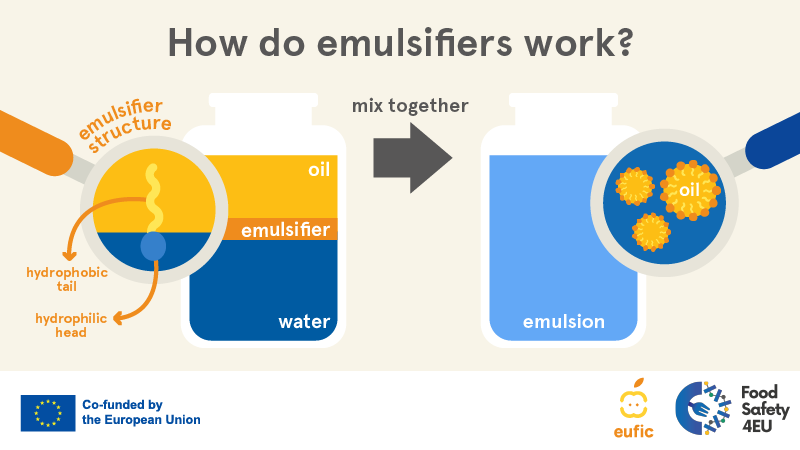
Great question, and the answer is: mostly yes, with a side of “it depends.” The natural ones—like egg yolk, honey, and mustard—are kitchen classics. The synthetic ones (e.g., polysorbates, carboxymethylcellulose) have been approved by food agencies, though some studies suggest they can mess with your gut bacteria if you go overboard. (But hey, so can too much kale, apparently.)
Ironically, your own body is a master emulsifier factory: bile acids from your liver break down dietary fats using the same “split personality” trick. So when you eat that creamy ranch dip, you’re basically relying on your own internal chemistry to do what you couldn’t do in a bowl. (Let that sink in next time you gorge on guacamole.)
A quick reality check (and a life hack)
If you’re feeling adventurous, you don’t need a chemistry lab to emulsify—just a good technique. Drizzle oil slowly into water while whisking furiously. Add a touch of mustard or a dab of honey. That’s it. You’re now an emulsifier artisan. (Also, don’t forget to salt early—salt helps tighten the water phase, making emulsions more stable. You’re welcome.)
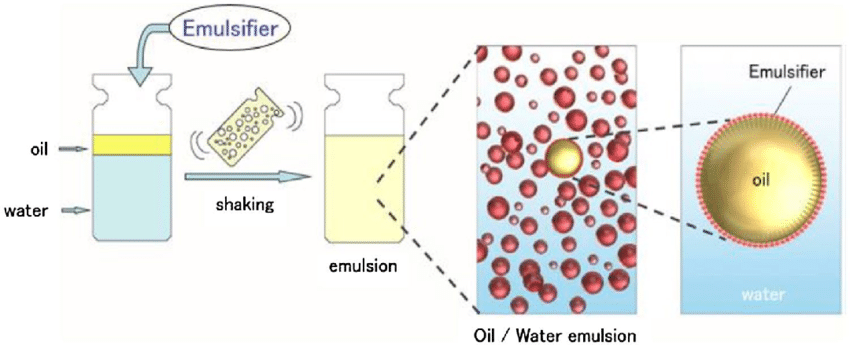 Process of forming an emulsion: Water, oil, emulsifier, and mixing are
And here’s a crazy fact: chocolate is an emulsion of cocoa solids in cocoa butter. Without emulsifiers like soy lecithin, your chocolate bar would be gritty, crumbly, and basically a disaster in wrapper form. Next time you bite into a silky truffle, give a silent nod to the tiny molecules holding it together. (They’re the unsung heroes of your dessert habit.)

