
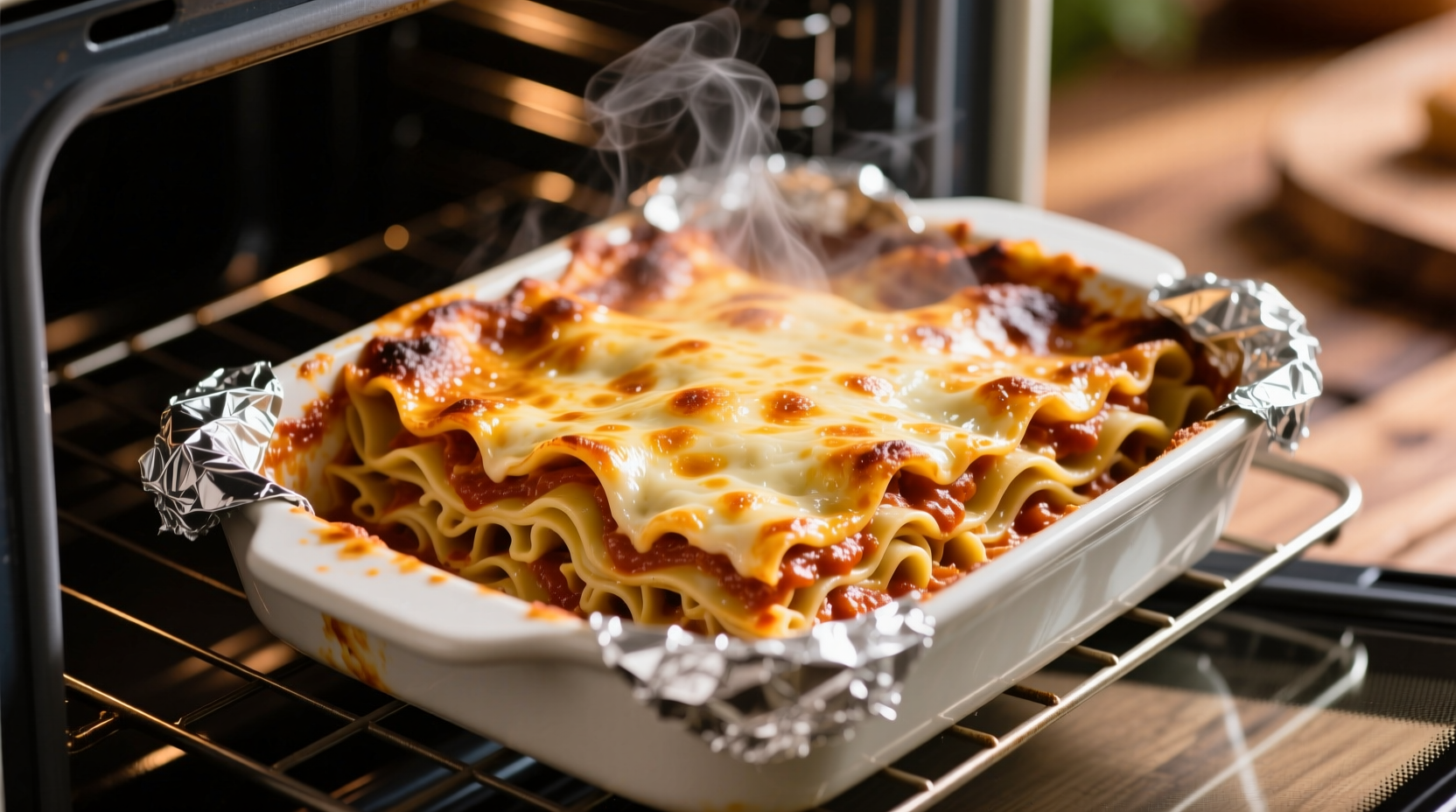
Yes, you must cover your lasagna with aluminum foil for the first 30 to 40 minutes. This traps steam and ensures the noodles cook evenly. Imagine you’re giving your lasagna a hot, steamy hug. Without foil, the top browns too fast, and you get a burnt crust over a raw center—which is basically a culinary betrayal. Remove the foil for the last 10 to 15 minutes to get that glorious, bubbly, golden-brown cheese that looks like Instagram-filtered happiness.
 How to Cook Frozen Lasagna: Oven Method for Perfect Results
But here’s the kicker: if you use uncooked pasta sheets (not the no-boil kind), you need a wetter sauce and a longer cook time—add 10 to 15 minutes, still covered. Otherwise, you’ll serve lasagna with a satisfying crunch. Not a good crunch.
The Temperature Trap (Don’t Trust the Timer Alone)
“But the timer says 45 minutes!” Yeah? And my uncle said pineapple belongs on pizza. We all make mistakes. Use a meat thermometer—yes, for lasagna. Insert it into the center. You want it to read 165°F (74°C) minimum. That’s the FDA’s magic number for killing off any bacteria that might be partying in your ricotta. No, you don’t have to gag at the thought; just measure it. If it’s below 160, put it back in, you impatient noodle-builder.
Fun fact: lasagna was mentioned in a 14th-century English cookbook, but the recipe called for three layers and took four hours over a wood fire. We’re lucky we have electric ovens and Netflix to binge while we wait. Appreciate modernity.
 How to Cook Frozen Lasagna: Oven Method for Perfect Results

