Think of rabies like that one friend who only texts you when they really need something. You can be around them all day, but they won’t pass you the “virus” unless they sink their teeth in. In scientific terms, rabies is transmitted almost exclusively through saliva—and that saliva needs to get into your bloodstream or mucous membranes (like your eyes, mouth, or an open wound).
A lick on intact skin? Not a big deal. A bite from an infected raccoon? That’s a whole different story. Statistically, 99% of human rabies cases come from dog bites in regions where rabies is common, like parts of Asia and Africa. In the U.S., bat bites or scratches are the main suspects.
Why Isn’t Rabies Like a Zombie Apocalypse?
Here’s where it gets clever. Rabies isn’t designed to be a fast-spreading pandemic. It wants to survive, but it does so by hijacking the nervous system of one host at a time. Imagine a virus that crawls from a bite wound up to your brain—like a tiny, evil climber. Once it reaches the brain, it causes inflammation and bizarre behavior (like aggression or fear of water), which makes the infected animal more likely to bite another creature.
Compare that to the flu, which spreads through a single cough to a whole bus. Rabies is more like a slow, clumsy assassin than a wildfire. It takes days or even months for symptoms to show, depending on where you’re bitten. A bite on your foot? The virus has a longer road trip to your brain. A bite on your neck? Yikes, that’s express delivery.
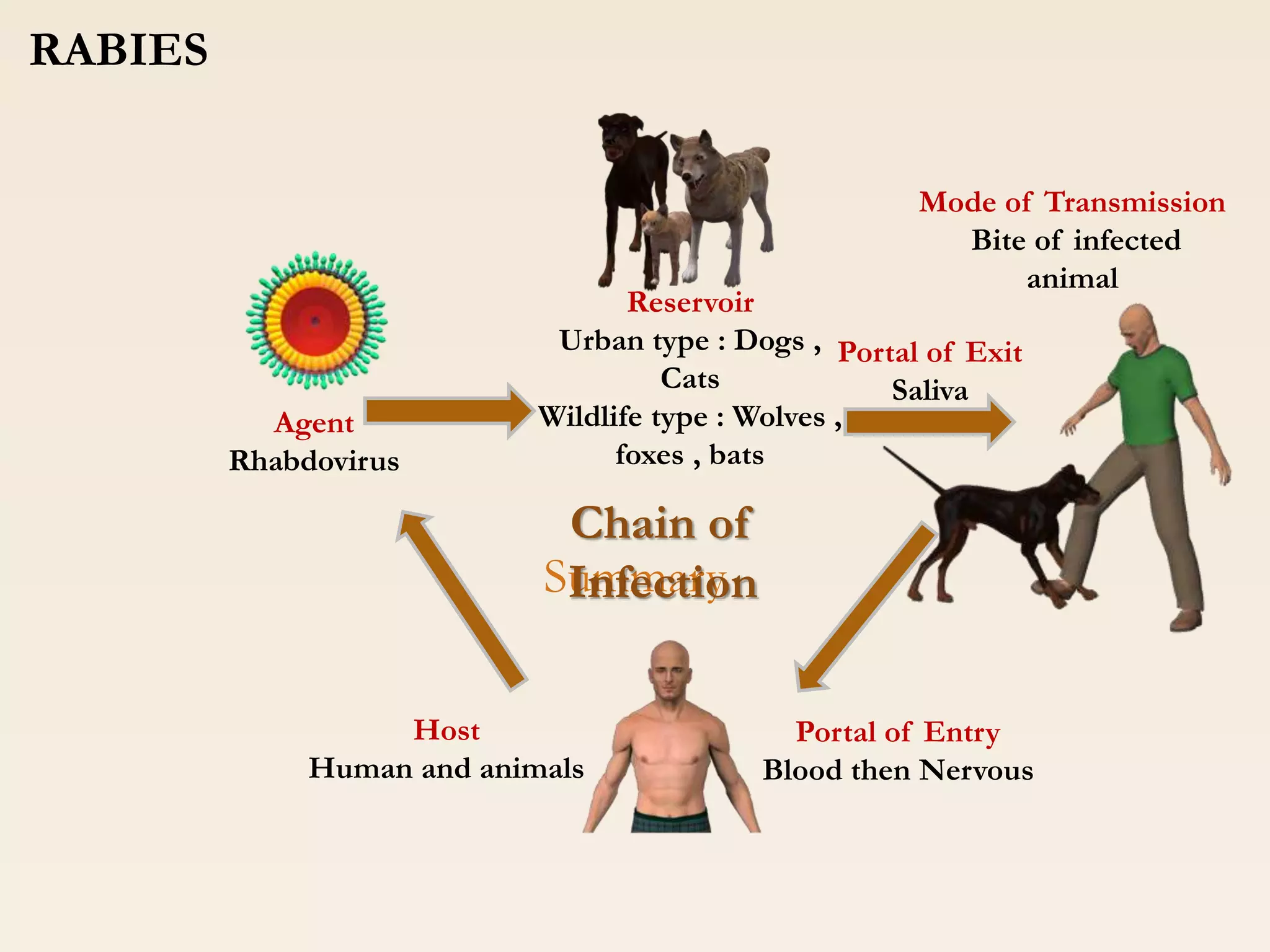 Rabies.ppt