
Wild turkeys are egg-laying pros. In the spring, a hen will find a hidden nest on the ground—usually in tall grass or under a bush—and lay a clutch of 10 to 14 eggs. She’ll then sit on those eggs for nearly a month, about 28 days, without moving much at all. Talk about dedication.
She’s a fierce mom, too. If a predator gets too close to her nest, she’ll puff up, hiss, and even attack. Never mess with a mother turkey—she’s got sharp claws and zero chill.
Domestic turkeys, the ones on farms, are a bit different. They’ve been bred over many years to grow huge chests of meat. This makes them too heavy to successfully mate or even sit on their own eggs without crushing them. That’s why farmers use incubators—artificial warm boxes that do the “sitting” for the turkey hens. It’s like a high-tech babysitter for eggs.
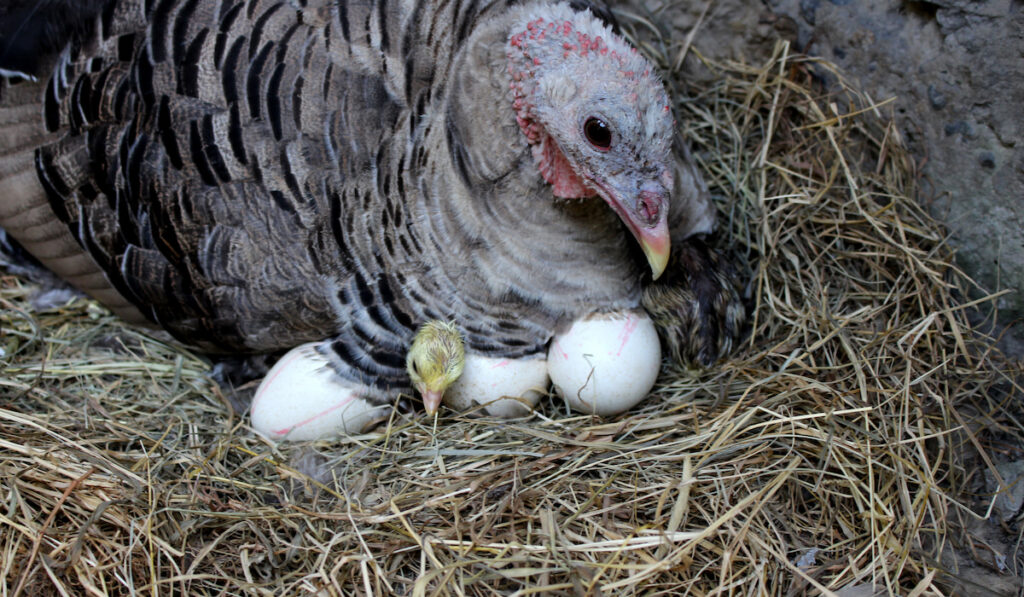 When Do Turkeys Start Laying Eggs (And 11 Other Fun Facts About Turkey
The Great Turkey Egg Taste Test
If you ever get your hands on a fresh turkey egg—maybe from a local farm or a backyard enthusiast—you’re in for a treat. Scramble it with a little butter and salt, and you’ll taste the difference immediately. The texture is fluffier, the flavor is richer, and it feels like your breakfast got a promotion.
One turkey egg is roughly the equivalent of two chicken eggs. So, if you’re making a massive frittata, you only need a few. Bakers love them because they make cakes and pastries extra moist and tender. Who knew a turkey could be a secret weapon in the kitchen?
But here’s a pro tip: don’t try to feed a turkey egg to your pickiest friend who “doesn’t like eggs.” They’ll notice the difference. It’s a whole new level of egg-sperience.

