
Ten thousand babies a day means we’re adding the population of a small town—like Bozeman, Montana—to the country every single sunrise. If you lined those newborns up head-to-toe (please don’t), they’d stretch for about 10 miles. That’s a lot of diaper changes and existential crying—both theirs and yours.
But here’s the kicker: that number isn’t the highest it’s ever been. During the Baby Boom (1946–1964), the daily tally was closer to 11,000 to 12,000 babies. So while you think your neighbor’s toddler is loud, Grandpa was part of a literal human tsunami. Today’s birth rate has actually dropped a bit, mostly because people are waiting longer to have kids—or realizing how expensive it is to keep a tiny human alive.
So who’s cranking out all these babies?
Geography matters here. If you live in Utah, you’re probably used to seeing strollers in herds—it has one of the highest birth rates in the country. Meanwhile, Vermont is over there like, “We have maple syrup and, uh, one baby every other Tuesday.” It’s a weird mix of culture, religion, and whether you can afford childcare (spoiler: you can’t).
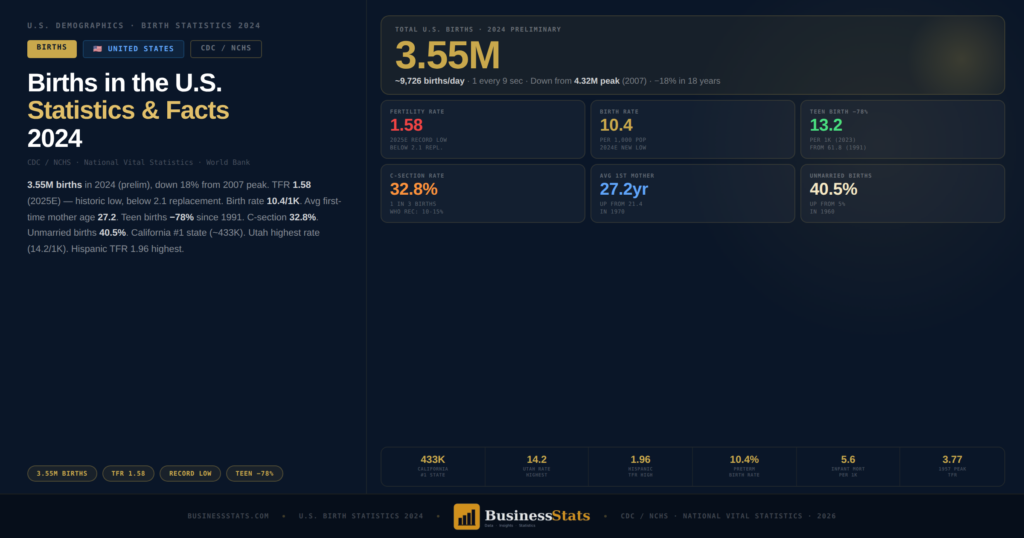 How Many Babies Born in U.S.? CDC's Shocking 2026 Data | Business Stats
And if you’re wondering when the busiest day for births is, put down your calendar. It’s September. Specifically, mid-September. That means a whole lot of couples were getting cozy around New Year’s Eve. Coincidence? I think not. There’s even a nickname: “the Christmas morning hangover effect.”

