
Here’s the mic drop: vaccines work. The MMR vaccine is incredibly effective. Two doses give you about 97% protection against measles. Before the vaccine existed in 1963, the U.S. had about 3 to 4 million measles cases each year, with 48,000 hospitalizations and 400 to 500 deaths annually. Now? Deaths are almost zero. That’s not luck—that’s science.
But when vaccination rates drop—like we’ve seen in some communities—measles comes roaring back. In 2019, the U.S. had its worst outbreak in decades, with 1,200 cases and a few deaths. That’s a tiny number compared to the old days, but it proves the virus is still waiting in the wings, ready to tango.
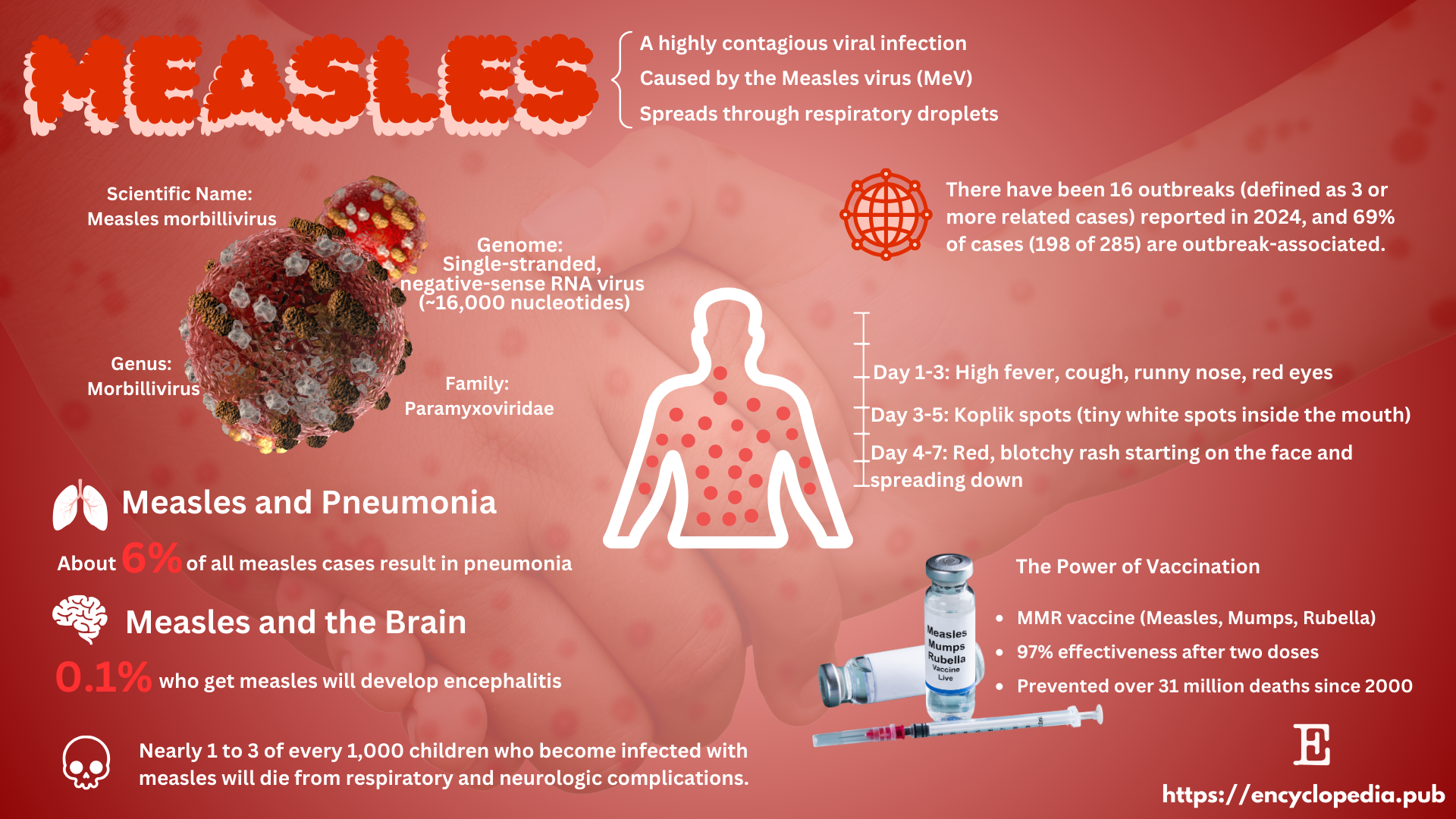 Measles | Encyclopedia MDPI
So, How Fatal Is It, Really?
Let’s be honest: for a healthy, well-nourished person in a modern country with good hospitals, your chance of dying from measles is very low. But it’s not zero. And the real danger is the complications—the surprise pneumonia, the brain swelling, the SSPE that shows up a decade later. It’s like playing Russian roulette with a semi-automatic gun. The bullet might not be in the chamber, but the odds are not in your favor.
Plus, measles is highly contagious. One person can infect 12 to 18 others. That means if you catch it, you become a walking public health disaster. It can spread before you even have a rash. So fatality isn’t just about you—it’s about the baby in the grocery store who can’t get vaccinated yet, or the grandparent on chemo.