
Defenders are those coworkers who show up early, do the spreadsheets, and never complain. They’re the unsung heroes of the team, the ones who quietly prevent disasters while the strikers get all the glory. They’re like the IT guy who fixes your Wi-Fi—you only notice them when something goes wrong.
You’ve got center-backs (the big, slow, brick-wall types) and full-backs (the ones who sprint up and down like they’re training for a marathon they didn’t sign up for). A good defender makes you feel safe, like a security blanket made of muscle and determination. A bad one? That’s the guy who leaves the milk out overnight and blames the cat.
Center-Back: The Rock of the Breakroom
Center-backs are the ones who never panic. They’re the person who, when the fire alarm goes off, calmly says, “It’s just a drill,” and then heads to the breakroom for a snack. They block shots, head clear balls, and occasionally shove a striker to the ground when the ref isn’t looking. That’s not illegal; it’s strategy, my friend.
Full-Back: The Overcaffeinated Intern
Full-backs run. A lot. They’re like the intern who volunteers for every project, then realizes they have no idea what they’re doing. They defend, they attack, they get tired halfway through the second half. You’ll see them gasping for air, thinking, “Why did I do this to myself?” Same energy as you after a flight of stairs.
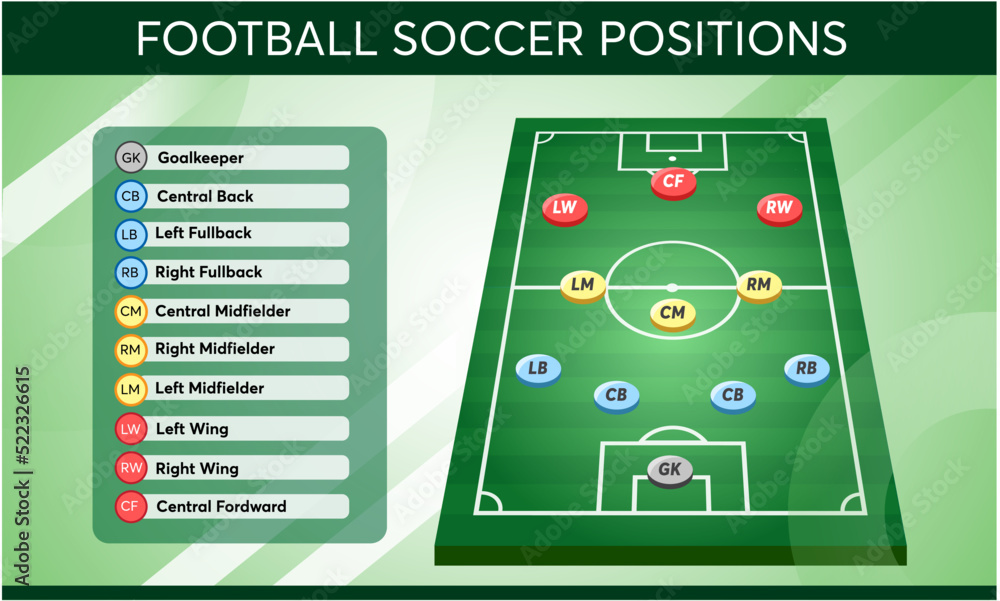 Infography of soccer players positions. football soccer positions

