
Here’s a secret: rest your meatloaf. After it hits 160°F, pull it out and let it sit for a solid ten minutes. This isn’t a suggestion—it’s a commandment.
Why? Because the juices need to settle down. Cut into it too soon, and you’ll have a sad, dry, crumbly mess running all over the cutting board. Patience is the real ingredient.
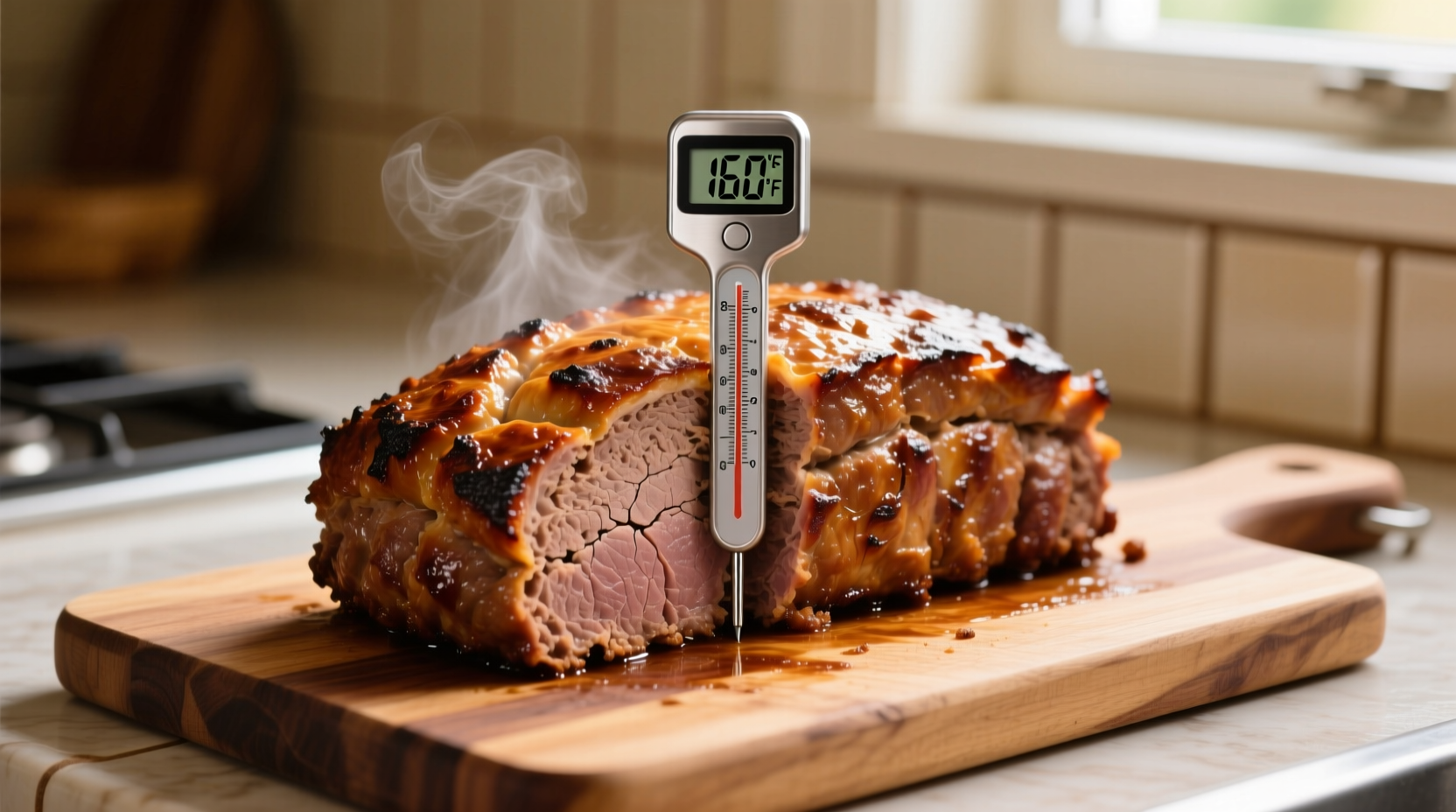 Meatloaf Temperature Guide: Cook Safely to 160°F
A quick tip: tent it loosely with foil. It’ll stay warm while the magic happens. Think of it like putting a cozy blanket on your creation.
The Shape Matters (Yes, Really)
Are you a loaf pan person or a free-form freak? Loaf pans are cozy and neat, but they can trap grease. That’s a soggy-bottom situation we don’t need.
Free-form on a baking sheet? That’s where the crust action is. More surface area, more caramelized edges, more happiness. Just shape it into a loaf about two inches thick.
Thicker loaves take longer. Thinner loaves cook faster. Use that logic, and you’ll never burn a meatloaf again. Probably.

