Here’s the nerdy part, but stick with me. Bagels are boiled before they’re baked. That boiling step gelatinizes the starch on the outside, giving you that glossy, chewy crust. If you undercook the inside, that gelatinized exterior traps steam, and you get a gummy, sad interior that tastes like regret.
If you overcook it, you dry out the moisture that makes bagels bouncy. You end up with something that would be better used as a doorstop. The sweet spot is a narrow window: 190-200°F. It’s the Goldilocks zone of baked goods.
But here’s the shocking part: that temperature isn’t just for texture—it’s for survival. Raw flour can harbor E. coli and Salmonella. Flour is a raw agricultural product, folks. Cooking it to at least 165°F kills the bad guys. So that 190°F? It’s your immune system’s best friend.
The Great Toaster Debate
Now, you’re probably thinking: “I don’t bake bagels from scratch. I buy them at the store and toast them.” Great. But even with pre-baked bagels, internal temp matters. That toaster is a liar. It browns the outside while leaving the center cold as a vampire’s handshake.
Ever taken a bite of a “toasted” bagel only to find a cold, chewy core? That’s a crime against breakfast. The fix is simple: toast it twice, or use a toaster oven. Let it rest for a minute after toasting. That allows the heat to migrate to the center, raising the internal temp another 10 degrees. It’s called “carryover cooking,” and it’s physics doing you a solid.
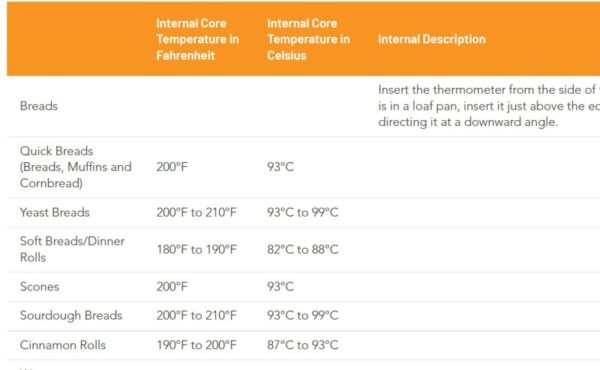 Baked Goods Internal Temperature Chart – The Baking Network
Fun fact: Montreal-style bagels are smaller and denser than New York bagels. They’re also boiled in honey-sweetened water. Their optimal internal temp is actually slightly lower—around 185°F—because the denser crumb would dry out faster. See? Even bagels have regional politics.