
Because life is full of splitting things in half. You share a ¾-pound burger with a friend. You need to know you each get 3/8 of a pound. That’s a fair split with no arguing. Fractions save friendships, people. Well, maybe not, but they save you from one less headache.
It also makes you feel smart. When you confidently say, “Half of ¾ is 3/8,” people look at you like a math wizard. All you did was double the bottom number. But that tiny piece of confidence carries over. Next time you see a fraction in a sale sign (“¾ off!”), you’ll know exactly how to halve the discount in your head.
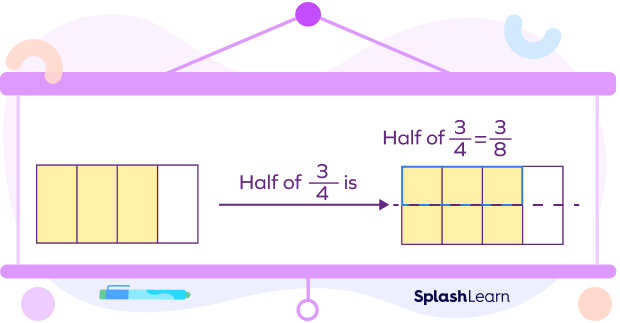 What are Haves in Math? Definition, Fractions, Examples
Let’s be real: nobody enjoys pulling out a calculator for basic cooking or sewing. Knowing this one fact means you can move faster. You can double a recipe or cut it in half without stopping to Google it. It’s a small superpower for your everyday flow.
Little Stories That Stick
I once watched my aunt try to halve a ¾ cup of flour for a pie crust. She dumped the whole ¾ cup into a bowl, then tried to eyeball half of it with a spoon. She ended up with a mound of flour that looked like a snowdrift. The crust was a brick. She could have used my trick: fill a ¼ cup twice, then just use one of those ¼ cups. That’s half of ¾.
Or picture this: you’re at a party, and someone hands you a fancy cocktail recipe that calls for ¾ ounce of simple syrup. You want to make a lighter drink. Half of that is 3/8 ounce. You can use a standard tablespoon (which is 0.5 ounces) and just fill it most of the way. You’ll look like a master mixologist.
The point is, these numbers aren’t just for homework. They’re for your actual life. They’re for the moment you need to measure, split, or share. And once you know it, you stop thinking, “Ugh, fractions,” and start thinking, “Ah, 3/8—got it.”
So, the next time you see “half of ¾,” smile. You have the answer. It’s 3/8. And now you have a story, a kitchen trick, and a little more confidence. Go make those cookies. You’ve got this.

