Ever see a heavy sign hanging from two cables? Symmetry is your best friend here. If the ropes are at equal angles, each rope carries half the weight… but wait!
Because the ropes are angled, each one actually feels more tension than half the weight. It’s like two friends carrying a couch up stairs—the steeper the angle, the more each one grunts. The equation? T = (mg) / (2 × sinθ).
So if the sign weighs 100 N and each rope is at 30°, each rope feels about 100 N. That’s double the “expected” load! Moral of the story: steep angles are jerks to your rope.
The Pulse Check: Atwood’s Machine
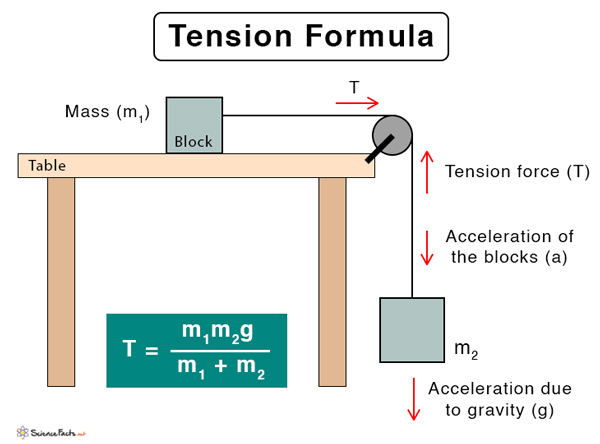
Now for the classic physics party trick: an Atwood machine. It’s two masses hanging over a pulley. The tension equation here is a bit like a seesaw for forces: T = (2 × m₁ × m₂ × g) / (m₁ + m₂).
If both masses are equal, tension equals mg—boring, symmetric, peaceful. If one mass is bigger, the heavier one falls, the lighter one rises, and tension sits somewhere in the middle. It’s like a family road trip where one kid is heavier than the other—the rope is the car’s seatbelt, keeping everything from chaos.

