
Then there’s vanilla extract. This is the workhorse of the kitchen. It’s just vanilla beans that have been chopped up and soaked in alcohol—basically, a vanilla bean spa vacation that ends in a bottle. The alcohol pulls out all those gorgeous flavors and preserves them for months.
You don’t have to wrestle with a knife or a tiny pod. You just glug, glug, glug a teaspoon into your cookie dough. It’s easy, it’s affordable (especially if you buy the store brand or the big jug), and it gives you about 90% of the flavor of a fresh bean. Plus, it’s incredibly forgiving. Forget to put it in? Just dump it in later. You can’t do that with a bean.
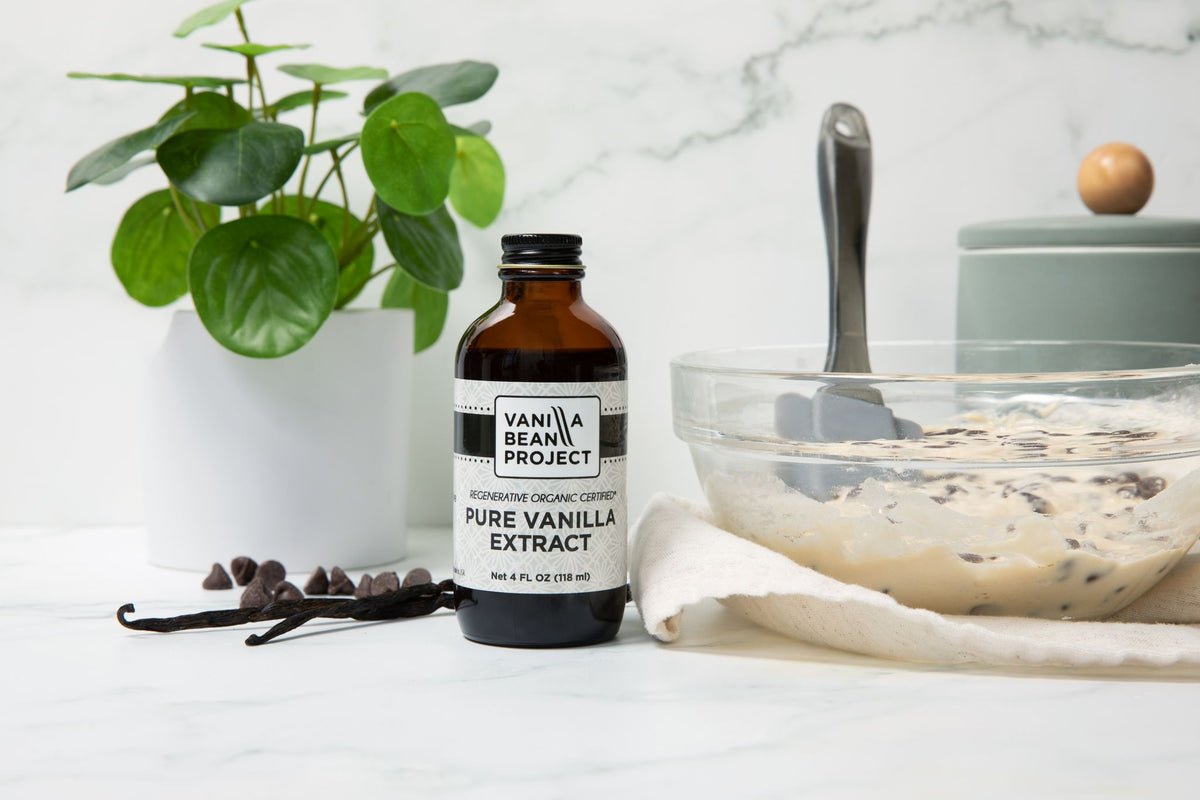 Regenerative Organic Certified Pure Vanilla Extract – Vanilla Bean Project
But here’s the catch: read the label. Some bottles are selling “vanilla flavor” which is just chemistry lab juice made from wood pulp. You want the stuff that says “pure vanilla extract.” The fake stuff smells like a candle and tastes like regret. Don’t do that to your grandma’s sugar cookie recipe.
When to Use What: A Very Important Flow Chart
Use the vanilla bean when you want a show. Think custards, panna cotta, ice cream, or a fancy frosting where people will see those tiny seeds and go, “Whoa, you’re a pro.” Use it for pie crusts, lemon curd, or any place where the vanilla is the star, not a backup singer.
Use vanilla extract for everything else. That means pancakes, chocolate chip cookies (it enhances the chocolate), bread puddings, and making your morning oatmeal taste like dessert. It’s your daily driver. Don't stress about the bean in a batch of brownies; the extract will do just fine.
Here’s a pro-tip: If a recipe calls for “vanilla,” they almost always mean extract. If they specifically say “vanilla bean,” they want you to look rich and impressive. It’s the culinary equivalent of wearing a tuxedo to a backyard barbecue. Possible, but maybe overkill.
 Vanilla Flavors In All Their Iterations

