
This timeline matters because it explains why so many people “get better” and then infect others. You might feel fine on day five, but you’re still a biological bioweapon. The CDC says you can spread the virus from one day before symptoms start to about five to seven days after. That’s a solid two weeks of potential mayhem.
Here’s a fun, dark fact: the flu virus doesn’t just live in your respiratory tract. It can also survive in your stomach acid for a short time—though that’s not its main hangout. Ever wonder why you feel nauseous? That’s the virus sending a scout to explore new territory.
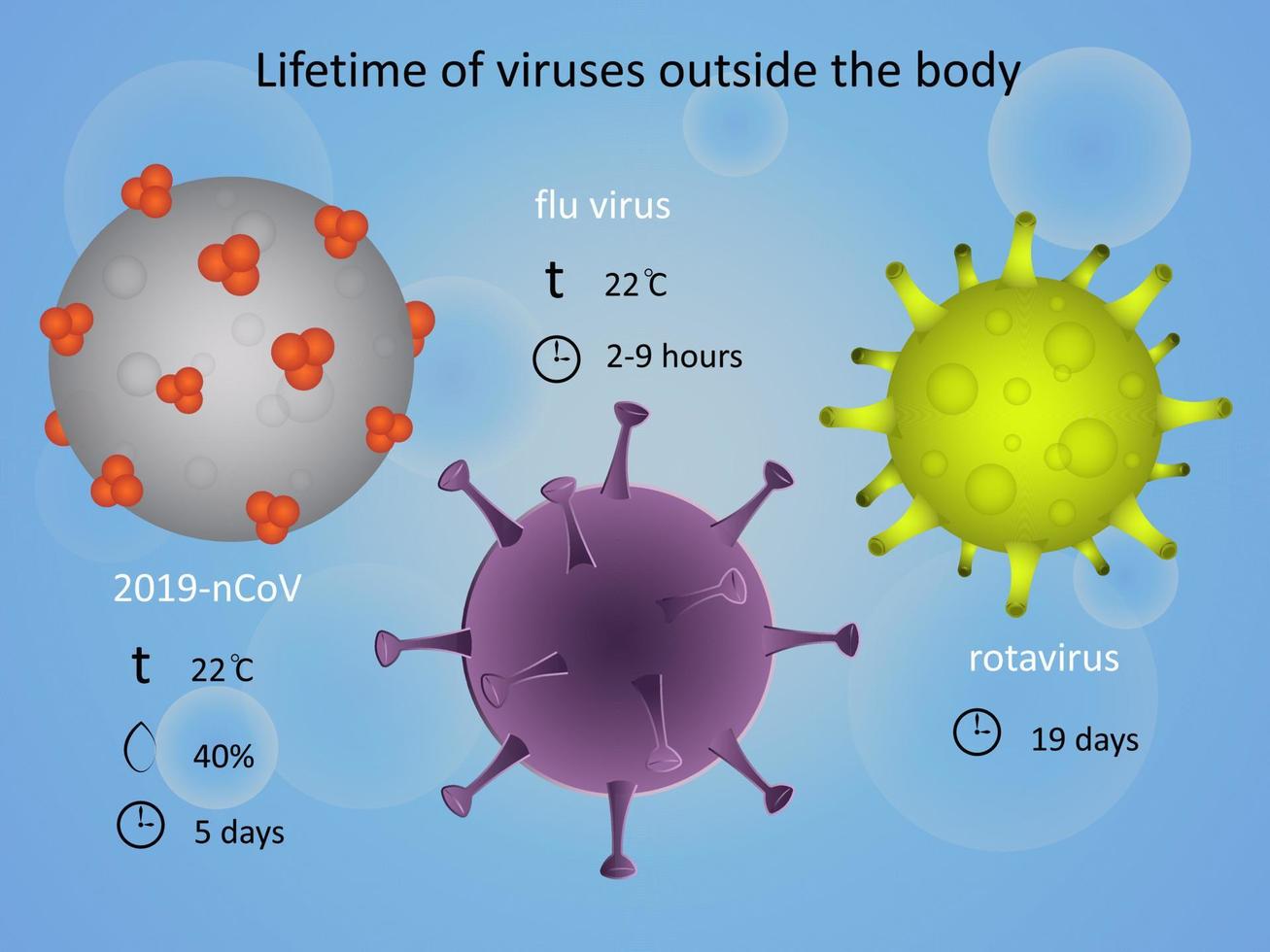 Lifetime of viruses outside the body. Medicine, health, infection
The Crazy Short Life of the Virus Itself
Let’s zoom out. A single flu virus particle, once inside your body, has a lifespan of only a few hours. Seriously—it’s like a mayfly with a grudge. But during those hours, it’s incredibly productive. One particle can spawn thousands of offspring. It’s not about living long; it’s about making a scene.
Imagine if you lived for only three hours, but in that time you cloned yourself 10,000 times. You’d be a nuisance, too. That’s the flu virus’s strategy: short life, huge family.

