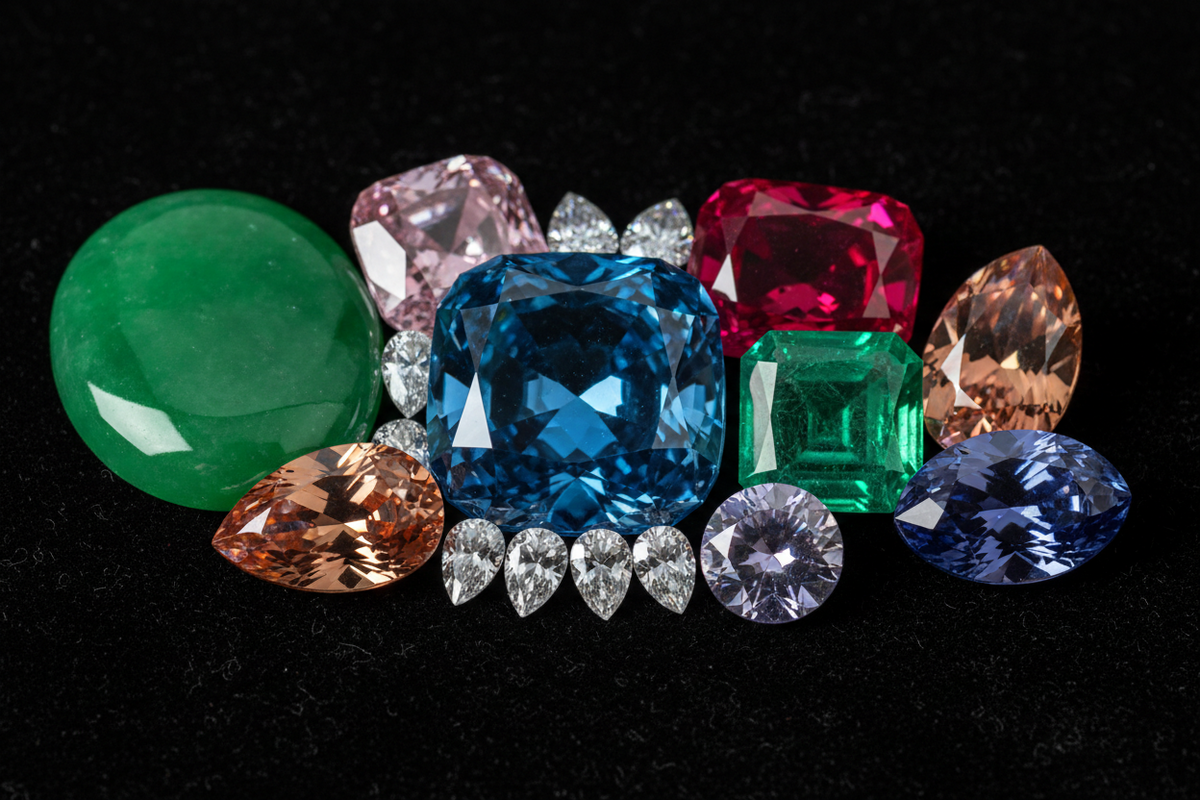
Let’s talk about the real royalty. Rubies. Specifically, the ones with a color called "pigeon’s blood." Don’t ask about the name; just know it’s a deep, fiery red that looks like a sunset if a sunset could cut glass. A top-quality ruby can easily out-price a diamond of the same size. No contest.
Then we have emeralds. Oh, emeralds. They’re like the dramatic friend everyone loves. They have to have little flaws—they call them "jardin" (French for garden)—because a perfect emerald is almost too good to be true. And when it is perfect? You better be sitting down. The price is astronomical.
The Rare Birds (The "Wait, What?" Gems)
Now we’re getting weird. Alexandrite is a shape-shifter. In daylight, it’s a cool green. Under candlelight, it turns a deep, moody red. It’s like having two gems for the price of one, except that price is "please mortgage your house." It’s insanely rare, which makes it insanely valuable.
Ever heard of Painite? For a long time, it was the rarest mineral on Earth. There were only a handful of crystals known. Now they’ve found a few more, but it’s still absurdly rare. It’s a dark reddish-brown that looks pretty, but the value comes from its "I own something almost nobody else has" factor. Fancy, right?
 Educational
And then there’s Jadeite. Not your grandpa’s green jade. We’re talking "Imperial Jade," a vivid, translucent green that looks like a candy you shouldn’t eat. The Chinese emperors went nuts for it. A single bangle of this stuff can sell for millions. Millions. For a bracelet.