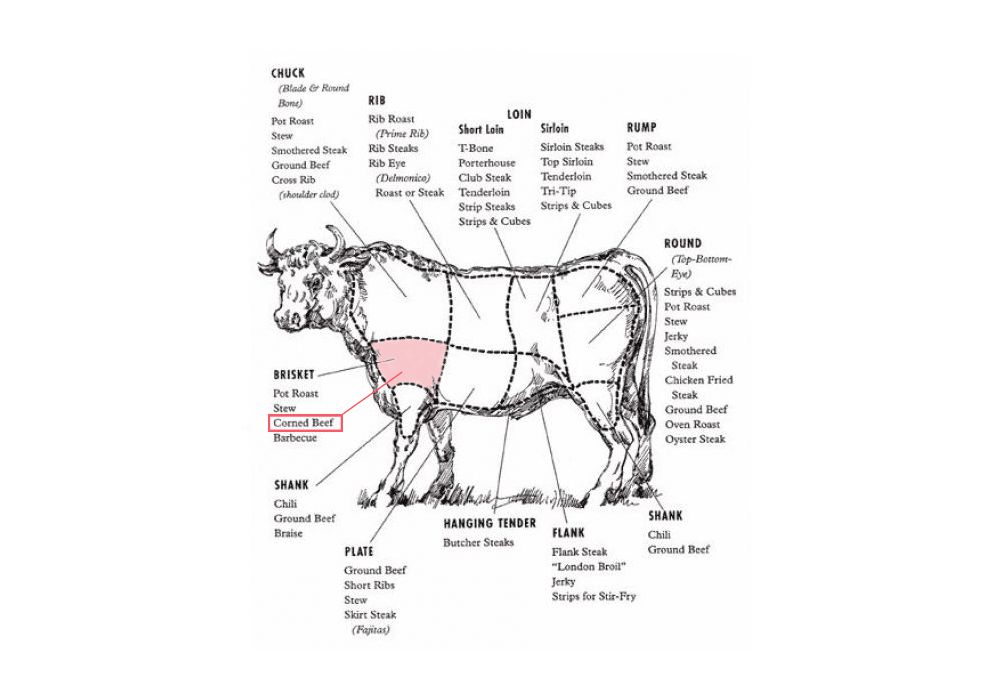
Good question! Why would we take a tough, cheap cut and make it famous? Because it’s perfect for curing. The dense fibers and fat content soak up that salty, spiced brine like a sponge.
 What Part of the Cow Does Corned Beef Come From?
You throw a ribeye into a salt bath for a week? You’d get a salty, expensive disaster. But a brisket? It loves attention. The brine—packed with salt, sugar, and pickling spices (hello, mustard seeds and bay leaves)—starts breaking down those tough muscles.
Then you boil, roast, or braise it for hours. And suddenly, that rock-hard chest muscle becomes tender, flaky, and pink. It’s alchemy, but with meat and salt.
One Weird Detour: The Silverside
Here’s where it gets tricky. If you’re in the United States, you’re getting brisket. Period. But if you’re in the UK, Ireland, or Australia? They often use a different cut called the silverside. That’s from the cow’s rear leg.
It’s leaner and a bit drier, but it still gets cured into corned beef. Don’t panic if you’re reading this from London. Your corned beef might be a leg muscle pretending to be a chest muscle. It’s fine. It’s still delicious.
But for the classic, fatty, "I can’t stop eating this" vibe? The brisket is the hero.