
In savory dishes, the swap is almost always a win. Think of a glaze for ham, a balsamic reduction, or a marinade for chicken. The darker sugar brings a smoky, earthy depth that makes those flavors sing. It’s a secret weapon in many East Asian and Caribbean recipes too.
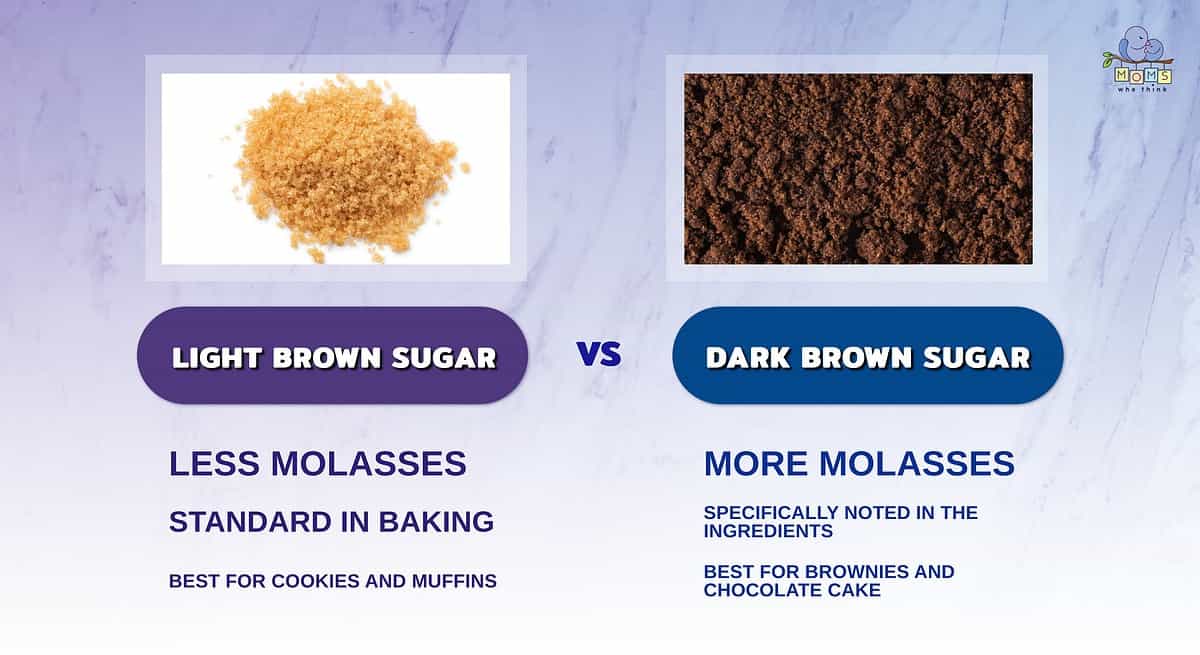 Dark Brown Sugar To Light Brown Sugar
For cookies, especially chewy ones like oatmeal or chocolate chip, dark brown sugar is your new best friend. It gives a more pronounced chew and a flavor that lingers. Chewy is the goal, and dark sugar delivers it with flair.
What about breads? Quick breads like banana or zucchini bread love the swap. The extra moisture helps keep them from drying out, and the molasses pairs perfectly with warm spices like cinnamon and nutmeg. It’s a match made in comfort-food heaven.
Measurement Hacks: No Math Required
You don’t need a calculator. If your recipe says “1 cup light brown sugar, packed,” you can use 1 cup dark brown sugar, packed, and just go. The ratio is one-to-one. Always pack your brown sugar firmly into the measuring cup—no air pockets—unless the recipe specifies otherwise.
If you’re truly out of brown sugar entirely? You can make your own. Mix 1 cup white sugar with 1 to 2 tablespoons of molasses for light, or 2 to 3 tablespoons for dark. Stir it with a fork until it looks like wet sand. This is a classic back-pocket trick for lazy Sunday baking.
Storing brown sugar is its own art. Keep it in an airtight container to prevent it from turning into a brick. A slice of fresh bread or a damp paper towel in the bag can soften it up overnight. Do not microwave it—you’ll melt the molasses and lose the texture.

