
Look, I love a good all-purpose spray as much as the next person. But for ringworm, you’re better off grabbing something with a different active ingredient. Bleach solutions (one part bleach to ten parts water) are the gold standard for hard surfaces. Or look for a fungicidal spray labeled specifically for ringworm.
Lysol’s main ingredient is often benzalkonium chloride or ethanol. They work, but they’re like bringing a water pistol to a laser tag match. It’ll do something, but not with the flair you want.
 Wormmy
So, how fast does Lysol kill ringworm? Answer: “It’s complicated.” Fast on glass (3 minutes). Slow on grout (10 minutes, maybe). And on your couch? That’s a hard “probably not.”
Let’s talk about surfaces, one by one
Hard, shiny surfaces: This is Lysol’s happy place. Think kitchen counters, bathroom tiles, and plastic toys. If you spray it and let it sit wet for a full five minutes, you’re golden. The spores will be toast. Just don’t wipe it off too early, okay? Let it marinate.
Metal or painted wood: A little trickier. Some Lysol formulas can be corrosive or damage finishes over time. Test a tiny spot first. I know, I know, you just want to nuke the fungus. But you don’t want to also nuke your coffee table.
Fabric, carpets, and bedding: This is where I give you the sad face emoji. Lysol’s laundry sanitizer can help in the wash (add it to the rinse cycle). But spraying the bottle directly on your blanket? That’s mostly for your peace of mind, not for actually killing the fungus. That’s right, I said it.
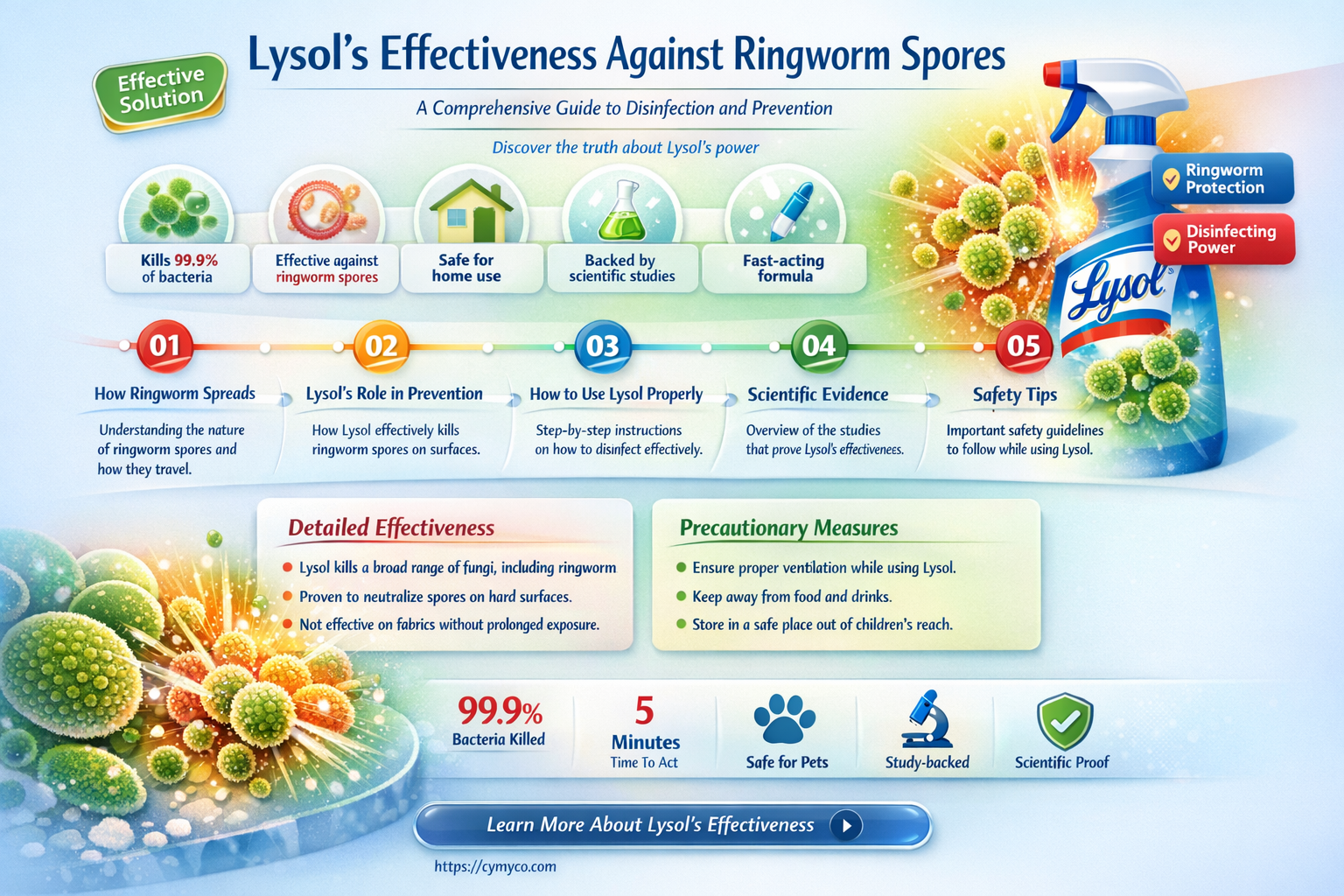 Lysol's Effectiveness Against Ringworm Spores: A Comprehensive Guide

