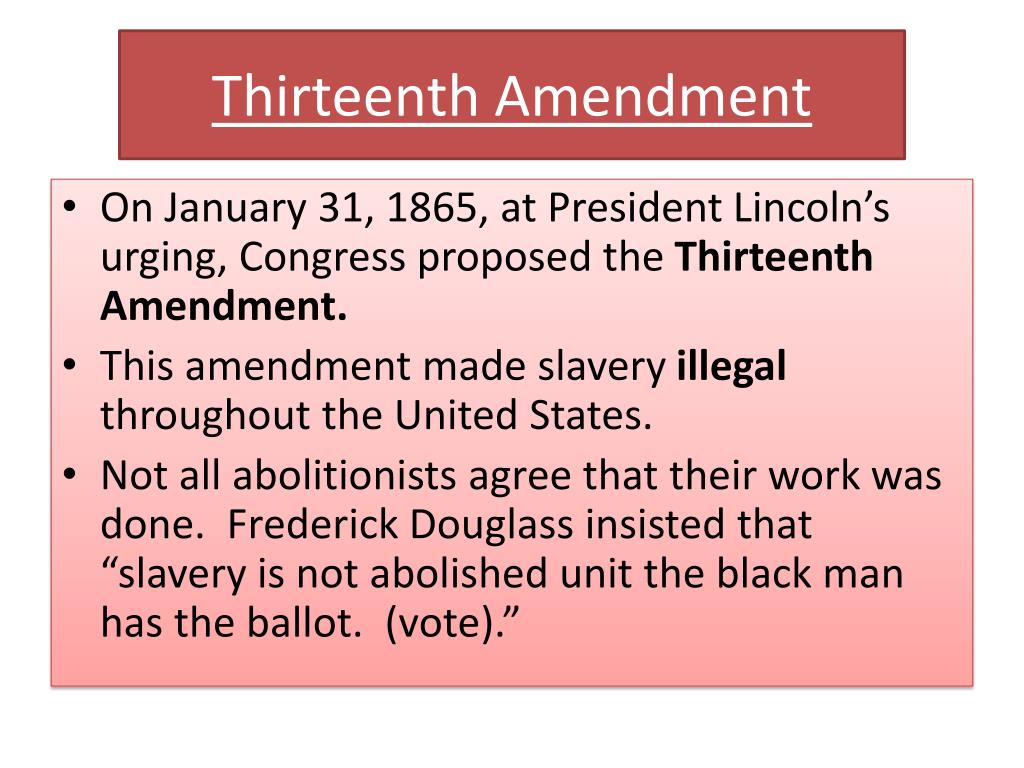
The official reason was to abolish slavery and involuntary servitude. Done, right? Not so fast. The Civil War was a bloody mess, and President Lincoln had already issued the Emancipation Proclamation in 1863. But the Proclamation was a wartime measure—a legal loophole on steroids. It only freed slaves in rebellious states, not in border states like Kentucky or Delaware. And what if the war ended? Poof—the whole thing could have been overturned in court. Talk about a shaky house of cards.
So Congress thought, "We need something permanent." Something that says, "No, really, slavery is over, and you can't undo it with a treaty or a judge's opinion." That’s why they wrote the Amendment. It was a constitutional cement truck, pouring a solid foundation for freedom.
The Sneaky Political Motivations
Let’s be real: politics was a circus. The Republican Party (Lincoln’s party) wanted to lock in their victory. If slavery stayed legal in some form, Southern states could come back to the Union with more power—counted as "three-fifths" of a person for representation, plus actual human property. That would give them insane influence. The Amendment killed that math. No more counting enslaved people for seats in Congress. It was like flipping the monopoly board.
But here’s a juicy bit: not everyone who voted for it was a saint. Some Republicans cared more about free labor markets than human rights. They thought freed people would work for wages, boosting the economy. Others worried about a flood of cheap labor from immigrants. The Amendment was a political compromise—a weird, awkward, but necessary hug between idealism and self-interest.

