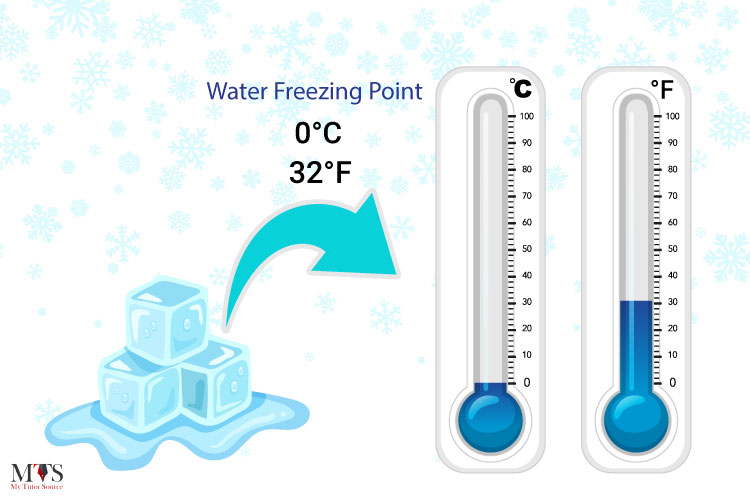
The textbook answer is pure, simple, and boring: fresh water freezes at 0°C (32°F) at standard atmospheric pressure. That’s the baseline—the scientific "if everything is perfect" scenario. But perfection is a myth, my friend, especially in your freezer or your local lake.
Here’s the kicker: water is a stubborn little rebel. It doesn’t always freeze at exactly 0°C. It can get supercooled—staying liquid down to -40°C or even colder—if there’s nothing for the ice crystals to grab onto. Think of it like a teenager refusing to go to bed; water needs a little nudge (an impurity or a vibration) to finally settle down into solid ice.
Impurities Are the Party Crashers
That salt I didn’t add to my pasta water? Yeah, it’s a game-changer. Salt lowers the freezing point of water, a process called freezing-point depression. That’s why we salt roads in winter: so the ice melts even when it’s below 0°C.
So, if you’re boiling seawater? It freezes closer to -2°C (28.4°F). Your tap water, with all its minerals and chlorine? It might freeze at 0.1°C or -0.1°C, depending on the local water treatment plant’s mood. Moral of the story: pure water is a fantasy.