
Let’s talk about the two main ways your softener “decides” to regenerate. A metered softener is the cool kid on the block. It has a little brain that counts the gallons of water flowing through it. When you hit your maximum capacity—say, after washing a bunch of dishes and a few loads of laundry—it says, “Okay, time to recharge.”
Then there’s the older timer-based model. This one regenerates on a fixed schedule, like a grumpy alarm clock. You set it for, say, every 7 days at 3 AM, and that’s it. It doesn’t care if you’re on vacation or if you had a pool party. It just goes, wasting a little water and salt if you didn’t use much.
Which one sounds better? The metered one is definitely the efficient choice. It’s like having a gas tank that only refills when you’re almost empty, instead of filling up every Sunday whether you need it or not.
Why It Regenerates at 2 AM (The Perfect Trick)
Ever notice that your softener almost always regenerates in the dead of night? That’s not a coincidence—it’s a strategic power nap. Your home uses the least amount of water while you sleep, so the softener can flush itself out without interrupting your morning shower.
 Can I Use Water While a Water Softener is Regenerating?
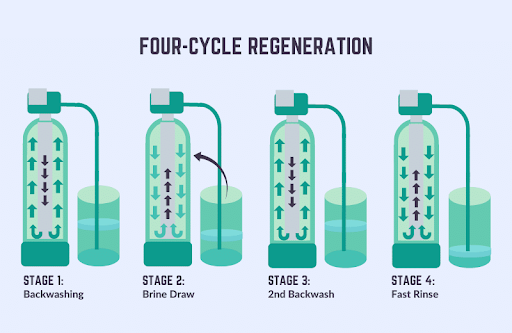
During regeneration, it actually goes through a few messy steps: it backwashes, sucks brine (salt water) through the resin, rinses it, and then settles back down. For about 60 to 90 minutes, your water might be a little “hard” or taste slightly salty. Imagine if your coffee maker took a 30-minute shower every morning—you’d want it to do that at 4 AM, not during breakfast.

