Purified water is any water that has had its impurities—like chemicals, bacteria, or that weird metallic taste—removed by a process. That process can be reverse osmosis, carbon filtration, or UV light. It’s like sending your water to a spa day: a good scrub, a detox smoothie, and it comes out fresh.
Distilled water is the diva. It doesn’t just filter impurities; it boils water into steam and then condenses that steam back into liquid. Imagine grabbing a glass of water, making it evaporate into a cloud, catching that cloud, and turning it back into water. That’s distillation. It’s so thorough it leaves behind everything—including good minerals like calcium and magnesium.
So all distilled water is purified, but not all purified water is distilled. It’s like all squares are rectangles, but not all rectangles are squares. (Side note: I once used that analogy in a meeting and my boss just stared at me. You’re welcome, fellow water nerds.)
The Dirty Secret: Taste and Minerals
Here’s where it gets ironic. Distilled water tastes flat. Seriously, try it. It’s like drinking nothingness because it’s missing those trace minerals that give regular water a bit of “snap.” Purified water, depending on the method, often keeps some minerals, so it tastes more like… well, water you’d actually want to drink.
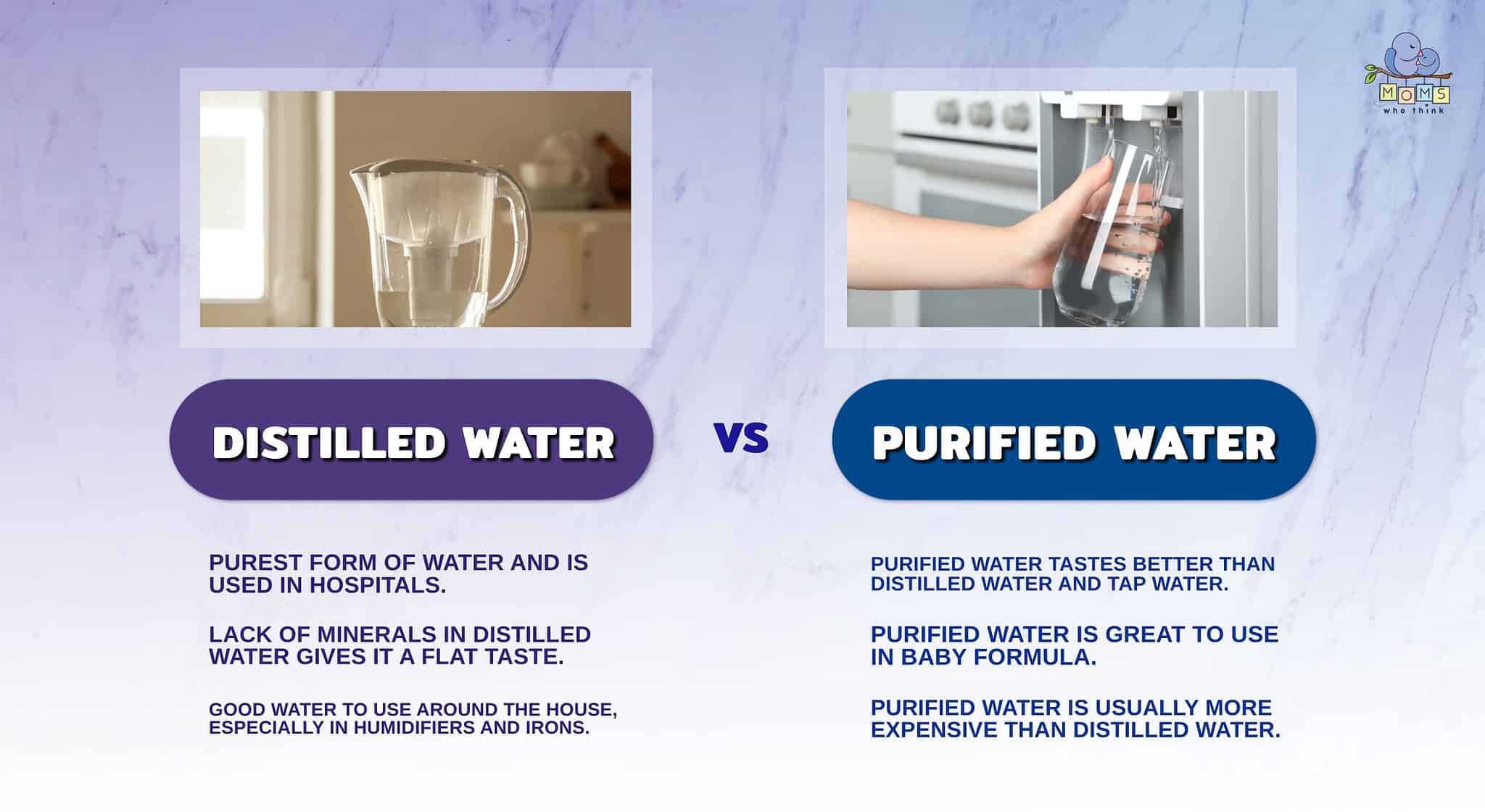 Distilled vs. Purified Water: 4 Differences & Health Benefits
But here’s the kicker: your body doesn’t need distilled water for hydration. In fact, drinking only distilled water for a long time can actually leach minerals from your body because it’s so “hungry” for stuff to dissolve. (Don’t panic, a glass now and then is fine. You’re not a lab experiment—unless you are, in which case, carry on.)
Ironic, right? The “purest” water is actually the least ideal for daily drinking. That’s why you see distilled water in CPAP machines, car batteries, and steam irons—equipment that hates mineral buildup. Your kidneys, however, love a little mineral action.
When to Use Which (And When to Just Chill)
If you’re filling a humidifier, a neti pot, or a car battery, go with distilled. You don’t want white mineral dust blowing into your lungs or crusting on your battery terminals. (True story: I once ruined a fancy espresso machine with tap water. It’s still traumatic.)
If you’re drinking, cooking, or making coffee, grab purified water. It’s clean, safe, and won’t make your morning brew taste like a sterile hospital. Most bottled waters labeled “purified” have gone through reverse osmosis, which is just as good as distilled for your health—without the weird taste.
 Distilled vs. Purified Water: What’s the Difference? – Waterdrop Europe
And if you’re just filling a glass from the tap? Relax. Unless you live in Flint, Michigan (no shade, serious respect), your tap water is already regulated and safe. Purifying it is just a bonus, not a necessity. (Unless you really hate that faint chlorine whiff. No judgment.)