
Flip over that statement and look for the “rate per 1,000 gallons.” That’s your magic number. In most places, it’s between $5 and $15. If you use 5,000 gallons a month (typical for a family), you’re looking at $25 to $75 for water alone. Add sewer, taxes, and fees, and boom—you’re at $60.
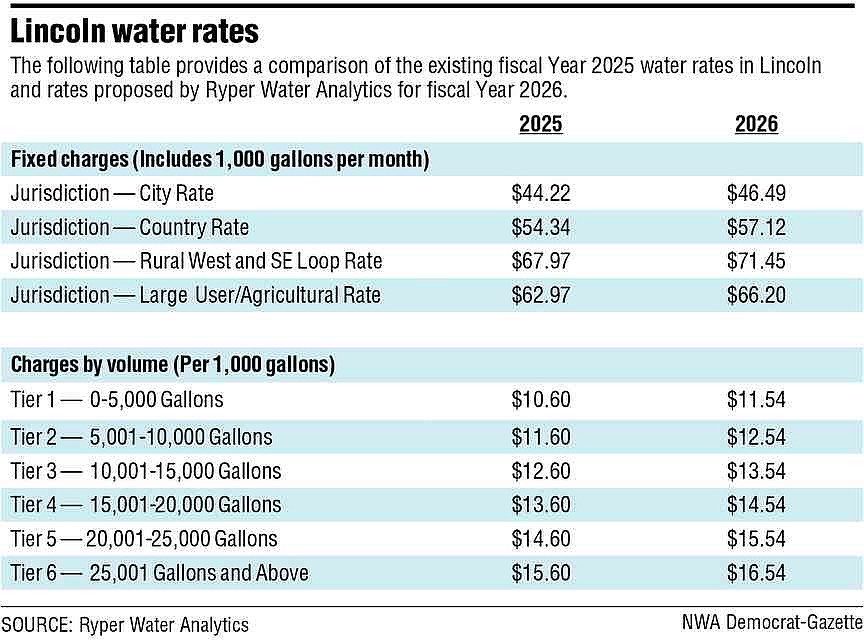 Study suggests Lincoln raise water rates in 2026 | Northwest Arkansas
But wait—there’s a twist. Some cities charge a base fee just for having a meter. It’s like a subscription fee for the privilege of turning on the faucet. Yes, it sounds a little greedy, but it pays for the pipes that run under your street, which are probably older than your parents.
The Big Picture: Why It’s Actually Cool
Here’s the cool part: water is a public good managed by your community. Unlike cell phone plans with their hidden fees and fine print, water rates are usually approved by your local city council in a public meeting. You can literally show up and ask, “Hey, why is my bill going up?” Try that with your electric company.
Water rates also tell a story about your region. Living in Florida? Your rates might be lower because of abundant rainfall. In Arizona? They’re higher because every drop is pumped from a river hundreds of miles away. Your water bill is basically a geography lesson disguised as a monthly expense.

