
First stop: your home plumbing. If your water’s pH dips too low (say, under 6.5), it becomes corrosive. Imagine a tiny, invisible army of acid molecules nibbling away at your copper pipes. Yikes.
That corrosion doesn’t just wreck your pipes—it leaches metals like lead and copper into your drinking water. Suddenly, that glass of water has a metallic aftertaste and maybe some stuff you don’t want in your body. On the flip side, water that’s too high (over 8.5) can leave scale—a chalky white crust—on your faucets and inside your kettle. It’s like your water is trying to build a tiny limestone cave in your coffee maker.
Most municipal water is treated to sit right around 6.5 to 8.5 on the pH scale. That sweet spot keeps your pipes safe and your water tasting clean. But if you’re on a well? You might want to test that pH yourself—your pipes will thank you.
What About the Fish?
Now, let’s take a trip to your local pond or river. For aquatic life, pH is like the volume knob on their entire world. Most freshwater fish, like trout or bass, are happiest between 6.5 and 9.0. When pH drops too low—maybe from acid rain or runoff—fish can get stressed out, their gills get damaged, and they can’t absorb oxygen properly. Not cool.
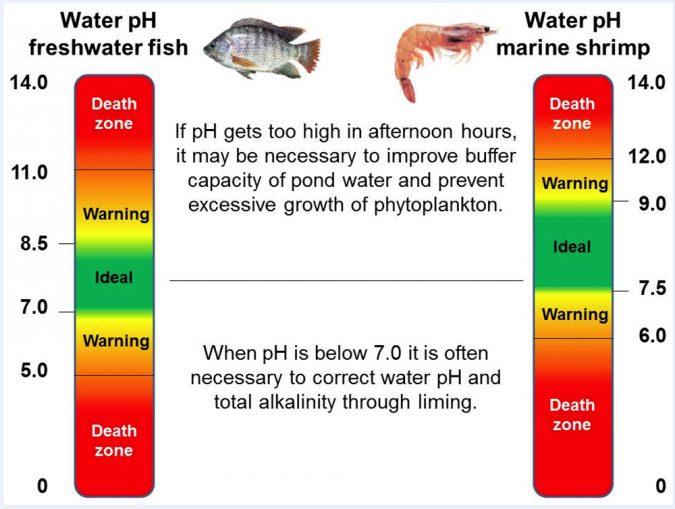 The oft-overlooked water quality parameter: pH - Responsible Seafood
Ever heard of a “fish kill”? That’s when a sudden pH shift wipes out an entire population. It’s dramatic, but it happens. Even tiny changes, like a drop from 6.8 to 6.0, can mess with a fish’s ability to reproduce or find food. Imagine trying to survive in a pool that’s slowly turning into vinegar—yeah, they’re not fans.
On the other end, super basic water (like from some natural springs) can be just as rough. It can burn their fins or make the water too cloudy for them to see. So, the next time you skip a rock at the lake, remember: that water’s pH is a lifeline for every creature in it.

