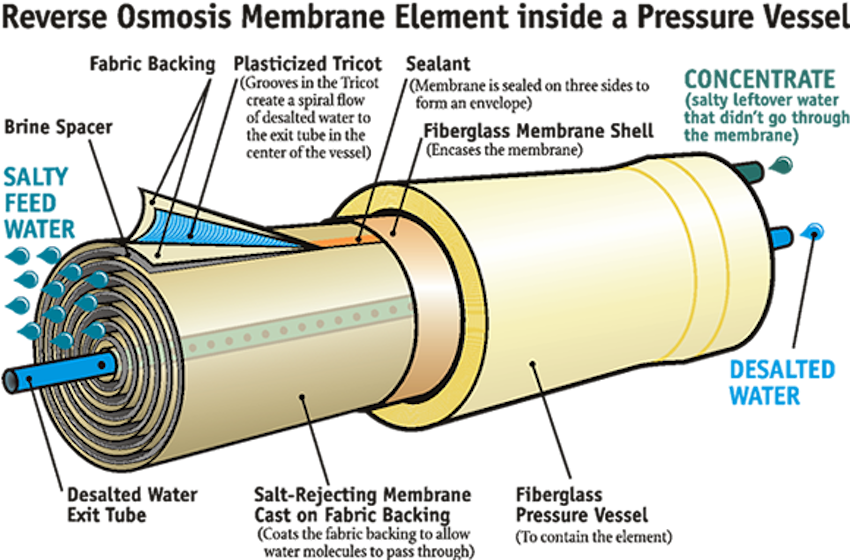
Picture a sponge with pores so tiny you’d need an electron microscope to see them. That’s the RO membrane. Water is pushed through it under pressure. It’s not a gentle soak; it’s a forceful squeeze.
The pressure overcomes something called “osmotic pressure.” Don’t worry, that’s just a fancy way of saying, “The water is forced to leave its friends behind.” The clean water goes into a storage tank, and the rejected gunk gets sent down the drain.
A typical system uses three to five stages: a sediment filter, a carbon filter, the RO membrane, and often a polishing filter. It’s like a VIP line for your water, but with more plastic tubing.
Is RO Water “Dead” Water? (Spoiler: No)
You might hear people say RO water is “dead” or “demineralized.” That’s a bit dramatic. It’s simply purified water, like what you buy in a store, but without the plastic bottle and the guilt.
 Why Reverse Osmosis is the Better Choice for Clean Water – Go Lime
Yes, it lacks some minerals, but you get plenty of minerals from food. Eating a handful of almonds gives you more calcium than drinking a gallon of tap water. So, don’t fret.
In fact, many coffee snobs prefer RO water because it doesn’t mess with the flavor of their precious, single-origin beans. It’s the ultimate blank canvas for your hydration.