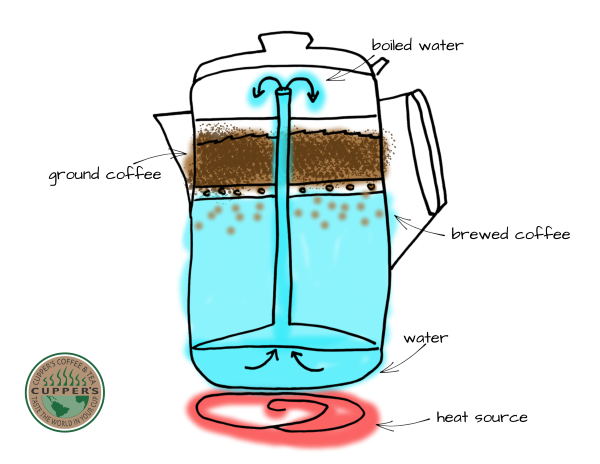
At its core, a coffee brewer is just a water heater with a mission. It takes cold water from a tank, heats it to the perfect temperature (usually around 195°F to 205°F), and then sends it on a journey through your coffee grounds. The result? A liquid that transforms you from a zombie into a human. Pretty neat, right?
Here’s the fun part: the water doesn’t just crash into the grounds like a clumsy guest. It’s carefully distributed to extract all those lovely flavors—oils, acids, and aromatic compounds—without burning them. Think of it as a gentle hug for your coffee beans.
Let’s Follow the Water’s Wild Ride
First, the water flows from the reservoir into a heating tube. This tube is like a tiny, high-speed sauna. As the water heats, it expands and creates pressure—this is what pushes it upward through a one-way valve. Science! (Yes, you can say that with a smug smile.)
Then the hot water arrives at the spray head, which looks like a little shower nozzle. It showers the coffee grounds evenly, ensuring every bit of coffee gets a fair chance to shine. If it just dumped water in one spot, you’d get weak, sad coffee. Nobody wants that.
Now comes the gravity party. The brewed coffee drips through a filter (paper or metal) and into your carafe. The filter catches the grounds, leaving you with a clean, dark liquid that smells like pure ambition in a cup. And that, my friend, is how you get from beans to bliss in under ten minutes.
 Visualizing the Function Structure of a Coffee Maker

