Your softener isn’t just a lump of resin; it’s a tiny, hard-working factory. After it traps all that calcium and magnesium, it needs a salt bath—a regeneration cycle—to rinse them away. The key question isn’t "how often," but "how much water are you actually using?"
Think of it like this: you wouldn’t refill your coffee cup after every single sip, right? But you also don’t want to let it run dry and then drink bitter, burnt sludge. Your softener feels the same way. Under-regenerating means you get hard water again. Over-regenerating wastes salt, water, and your cash. Neither is fun.
The Simple Answer (For Most People)
If you have a modern, demand-initiated softener (fancy name, I know), stop worrying. It watches your water usage like a hawk. It regenerates only when it needs to—usually every 3 to 7 days. That’s the dream. Set it and forget it!
But if you’re using an older, timer-based model (the kind that regenerates on a schedule regardless), you’re flying blind. Those usually default to every 3 days. For a family of four, that might be perfect. For a single person, it’s like buying a bus pass for a tricycle. Wasteful.
Let’s Do Some Real-World Math (Don’t Panic!)
Here’s the friendly part: your water hardness matters. You can find it on your city’s water quality report or grab a simple test strip. Hard water at 10 grains per gallon (gpg) needs more frequent regenerations than water at 3 gpg. It’s just physics, and physics loves a good plan.
Also, count the people in your home. More showers, dishwashers, and flushing equals a faster-draining softener. A general rule? A standard 30,000-grain softener for a family of four with 10 gpg water should regenerate around every 3-4 days. A couple in the same house? Stretch that to every 6-7 days. See? Painless.
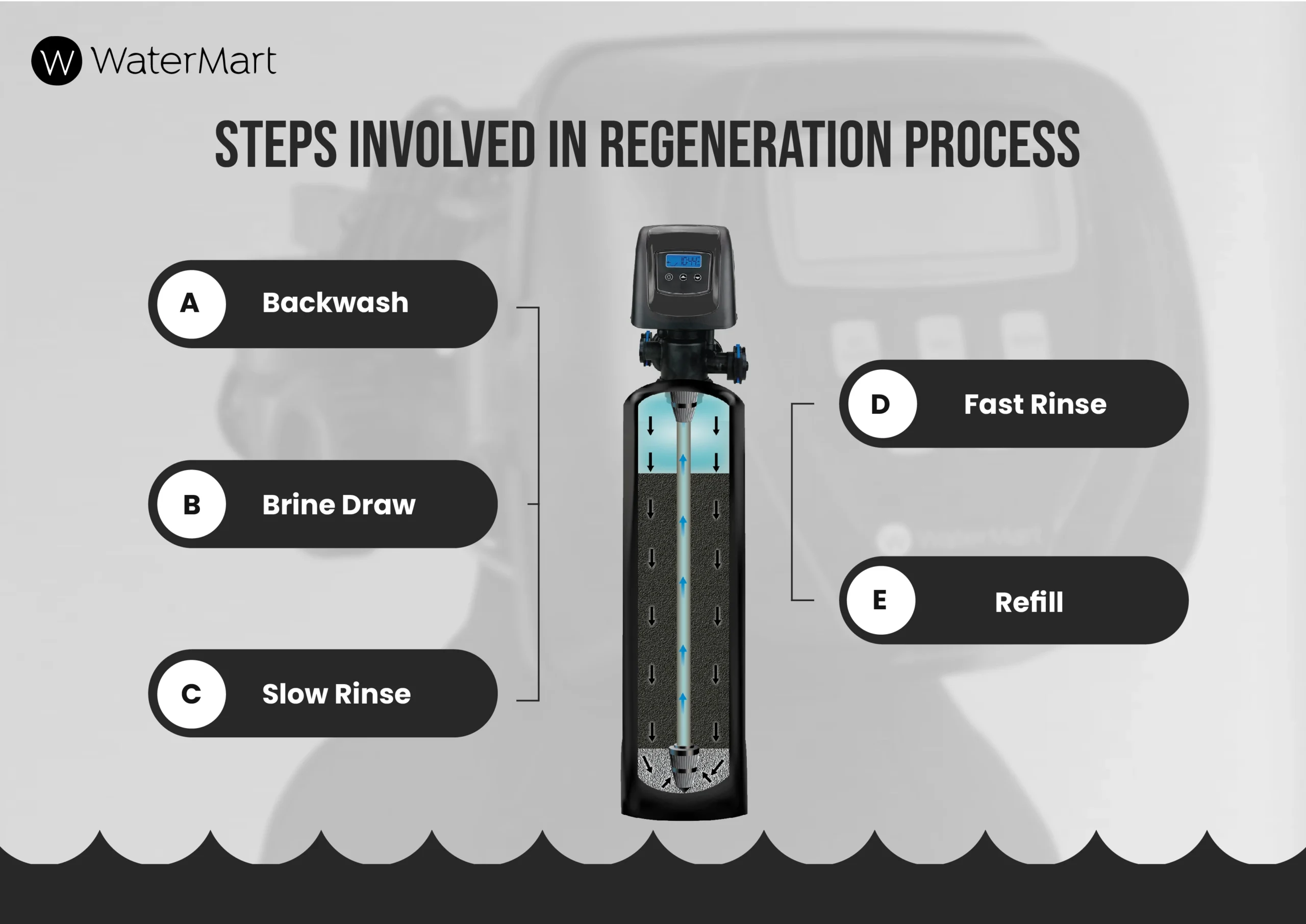 What Is Water Softener Regeneration - Process And Its Types