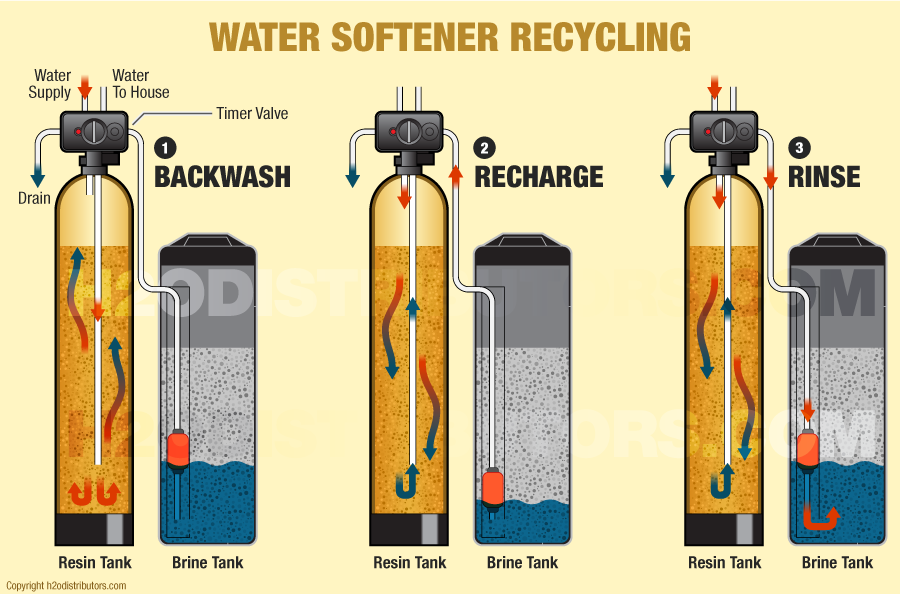
Imagine you’ve got a giant sponge full of tiny, sticky beads. Those beads are coated in sodium ions—basically salt particles with a positive charge. When hard water flows through, the calcium and magnesium ions scream “Dibs!” and hop onto the beads, swapping places with the sodium.
It’s like a microscopic game of musical chairs. The calcium and magnesium get stuck, while the harmless sodium ions ride away with the water. And that’s it—the water comes out soft, silky, and friendly to your soap.
This process is called ion exchange. Fancy name, right? It’s just chemistry doing its little dance. And trust me, your shampoo will send you a thank-you note.
The Star of the Show: The Resin Beads
Those tiny beads I mentioned? They’re called resin beads, and they’re the real heroes here. They’re basically microscopic magnets for hardness minerals. They hold onto them tight, like a toddler clutching a teddy bear.
But here’s the kicker: the beads have a limited capacity. Think of them as a parking lot. Once every spot is filled with calcium and magnesium, your softener needs to take a break. That’s where the regeneration cycle comes in—the softener’s pit crew.
During regeneration, the system flushes a super-concentrated saltwater solution—called brine—over the beads. That saltwater is like a bully that says, “Move over, calcium! I’m coming through!” And the sodium ions push the clingy minerals off the beads.